


Robert P. Rubicco: Criminal, Liar, Fraud, Daycare Operator: Table of Contents
QUEENS, NY (January 26, 2026) — A New York-based merchant cash advance company reached a private settlement with the owners of a Connecticut and New York daycare chain in early 2023, resolving a breach-of-contract lawsuit over a $200,000 advance that Cloudfund LLC claimed had gone into default.
Cloudfund LLC filed suit against 770 Treehouse LLC and Anna & Jacks Treehouse LLC — both doing business as Anna and Jacks Treehouse — and owner Robert P. Rubicco Jr. (who personally guaranteed payment) in April 2022 in Queens County Supreme Court (Index No. 707808/2022). The complaint alleged that on June 14, 2021 the companies sold $264,000 of future receivables to Cloudfund for an upfront purchase price of $200,000, with a net disbursement of $195,897 after fees. The agreement required 39 percent of daily receipts to be remitted via ACH from an exclusive bank account.
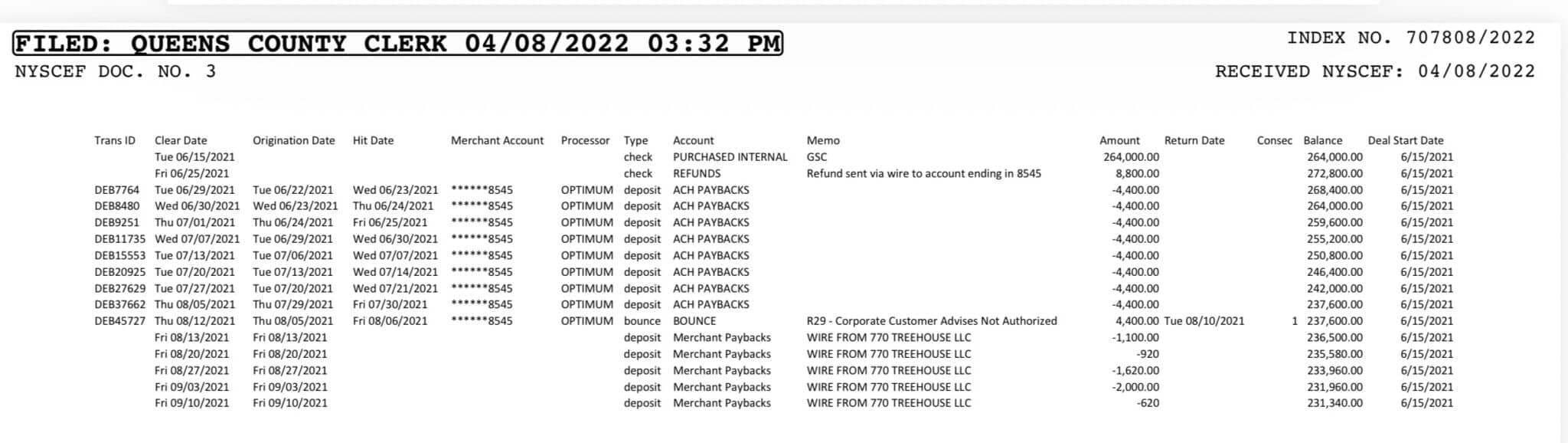
According to Cloudfund’s internal remittance ledger (NYSCEF DOC 3), the defendants remitted approximately $32,660 before payments stopped around September 10, 2021. The company accused the defendants of blocking ACH access, ceasing deposits, and diverting receipts, triggering acceleration of the full remaining balance of $231,340 plus 9 percent pre-judgment interest from the default date.
The defendants, represented initially by Alexander M. Dudelson, Esq., filed a verified answer with affirmative defenses and counterclaims on May 13, 2022. They denied the breach allegations and asserted that the transaction was not a legitimate sale of future receipts but a disguised criminally usurious loan. Among their nine affirmative defenses were claims that the reconciliation provision was illusory, the arrangement eliminated all risk to the lender, the personal guarantee was absolute regardless of receipts, and the effective interest rate exceeded New York’s 25 percent criminal usury cap. The counterclaims accused Cloudfund of predatory lending practices targeting small businesses struggling after COVID-19.
This is a common defense in MCA default cases. It did not work.
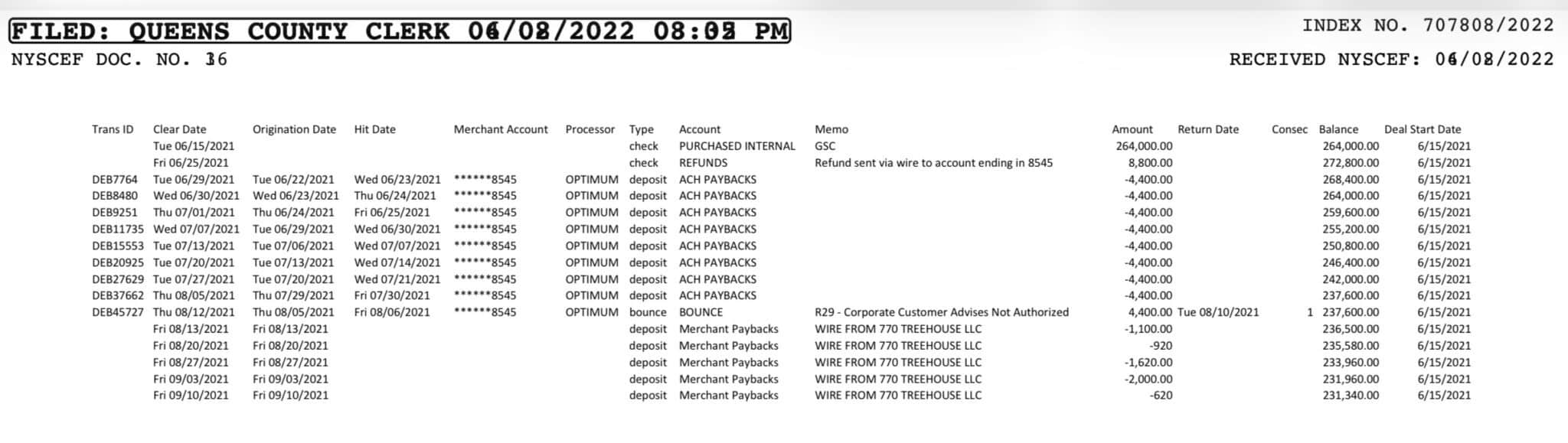
Cloudfund moved for summary judgment on June 2, 2022, seeking $231,340 plus interest and dismissal of the counterclaims. The motion was supported by an affidavit from company representative Angelo Luistro, the full agreement, and the payment history ledger (NYSCEF DOC 16).
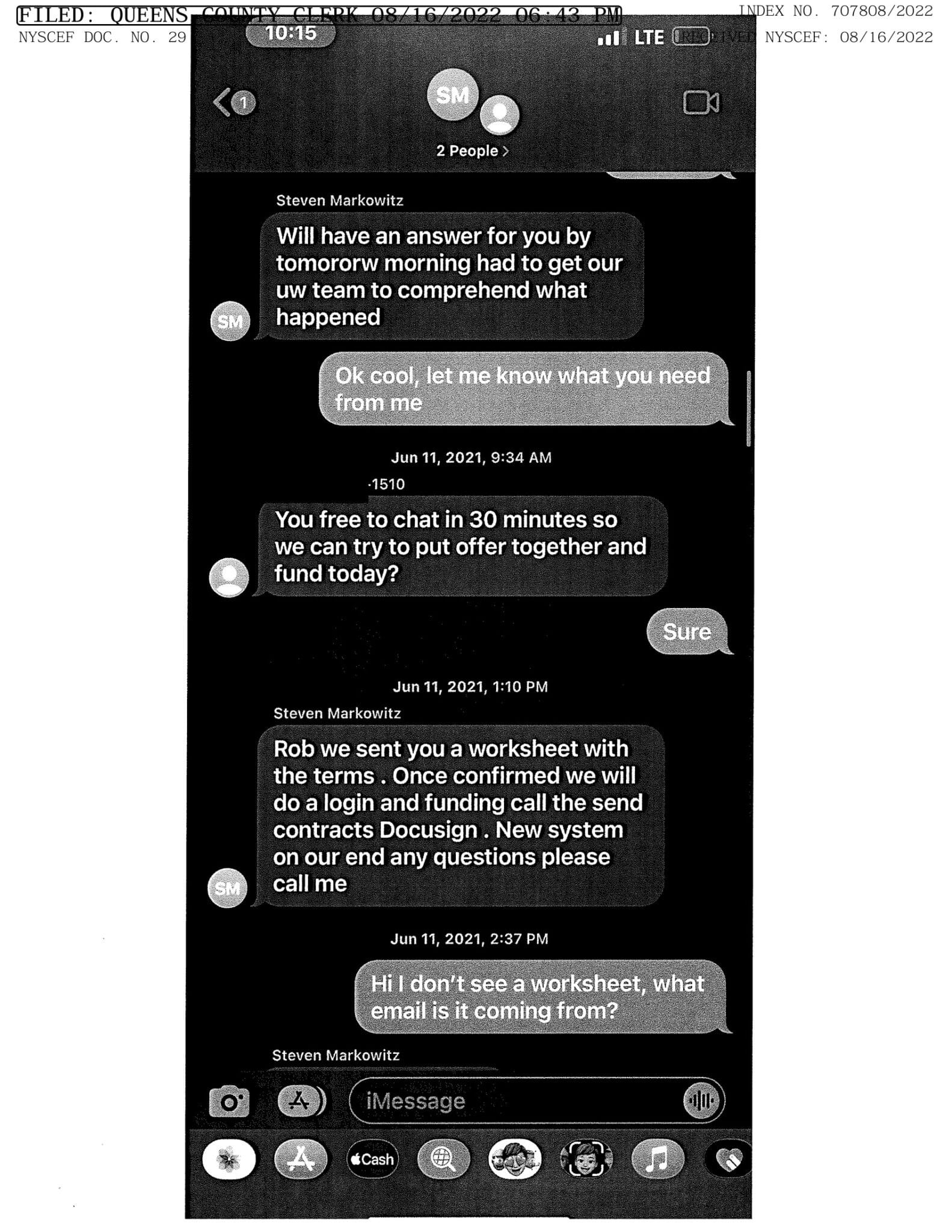
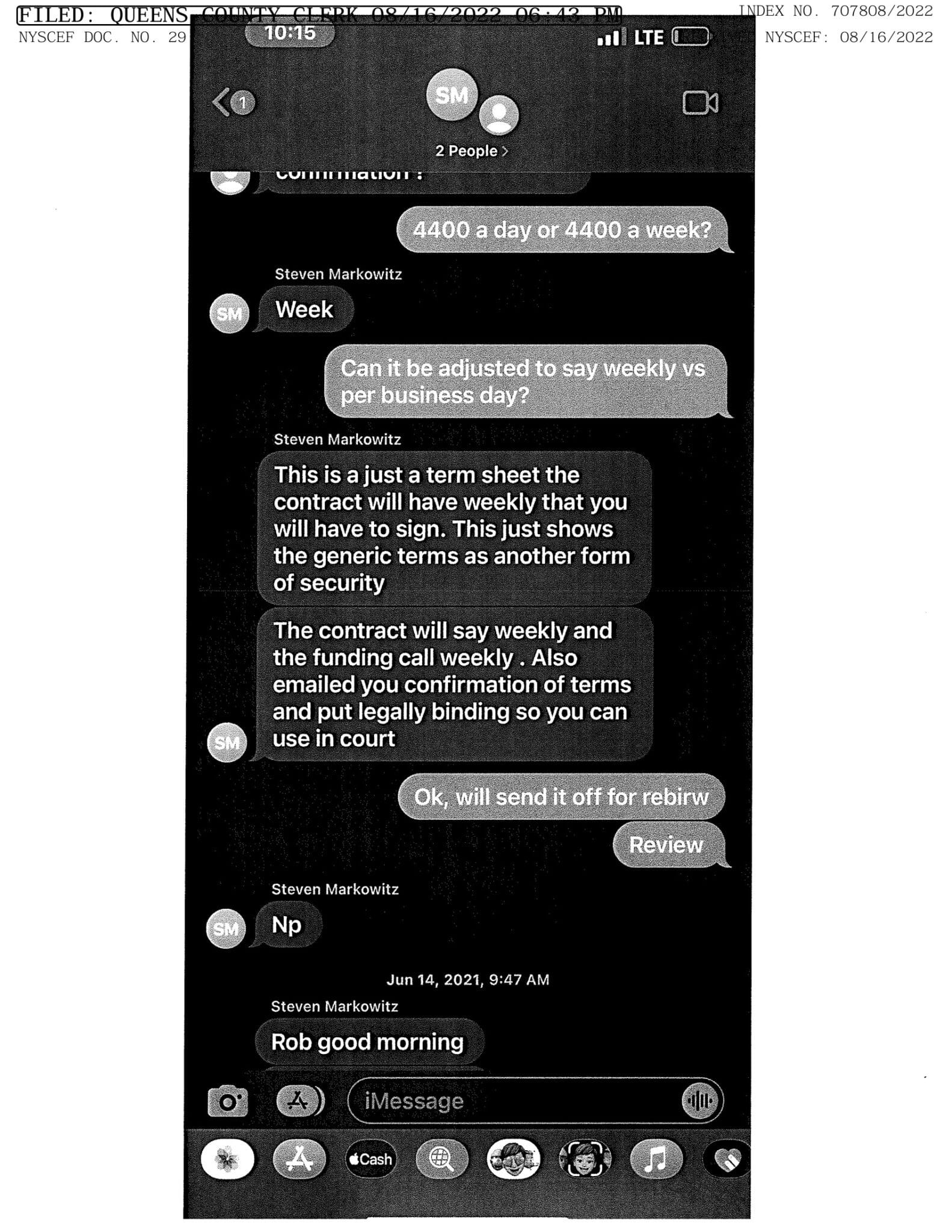
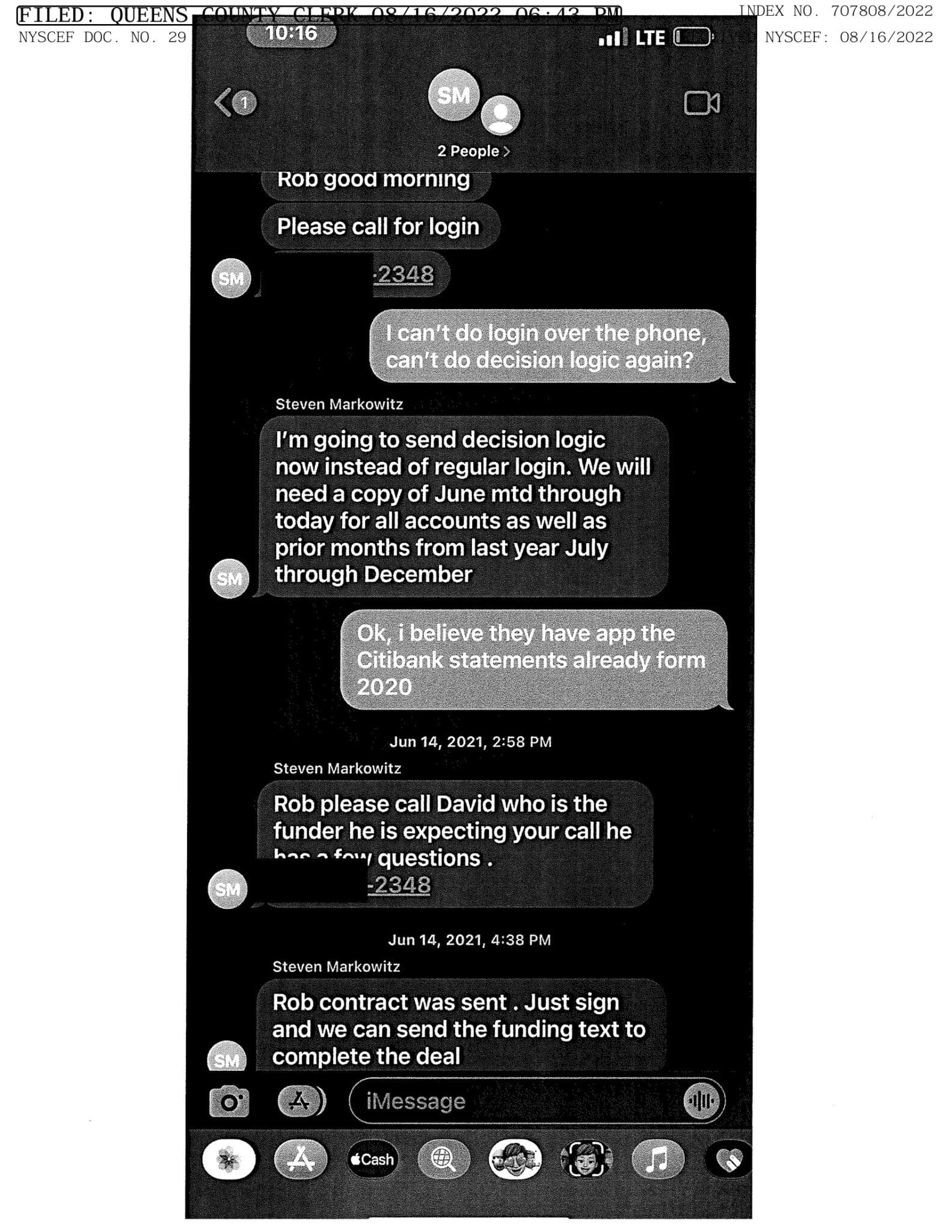
In opposition, defendants submitted a 46-page memorandum of law, Rubicco’s own affidavit, and exhibits including prior MCA agreements with Vox Funding LLC (dated January 2021), text messages with brokers (see below) Brett Sanders and Steven Markowitz of Samson Partners LLC (a Cloudfund assumed name), a New York Department of State printout listing Cloudfund’s multiple DBAs, and other materials intended to show a pattern of broker-driven, high-rate financing.
Discovery proceeded through late 2022, with Cloudfund serving a notice of deposition (originally scheduled December 20, 2022), a demand for a verified bill of particulars, a notice of discovery and inspection (seeking bank statements, ledgers, and communications from September 2021 onward), and a notice to admit (asking defendants to concede they collected more than $593,000 in receivables post-default and continued ordinary business).
A preliminary conference order was entered September 26, 2022, and a compliance conference took place January 10, 2023.
On January 9, 2023, Jacovetti Law, P.C. filed a notice of appearance as new counsel for the defendants. Three days later, on January 12, 2023, the parties filed a stipulation of settlement. The agreement required the defendants to pay the full $231,340 principal in installments: $3,500 in January, February, and March 2023; a $118,000 balloon payment on April 28, 2023; and $3,500 monthly thereafter until satisfied.
Any default would allow Cloudfund to enter judgment for the remaining balance plus 9 percent interest and costs without further notice or court order. Upon timely full payment, Cloudfund agreed to file a stipulation of discontinuance with prejudice.
On January 17, 2023, Justice Joseph Risi denied Cloudfund’s summary judgment motion as moot due to the settlement. The case was discontinued and no further filings appear in the public docket. There is no court of record stating the settlement was satisfied.




What is a Merchant Cash Advance (MCA)?
A merchant cash advance is a form of alternative small-business financing in which a company (the “funder”) provides a lump sum of cash to a merchant in exchange for the right to collect a percentage of the merchant’s future credit-card and other receipts until the agreed total amount is repaid. Unlike a traditional loan, an MCA is structured as a purchase of future receivables rather than a debt with fixed payments and interest. Repayment is typically made through daily or weekly automatic ACH debits from the merchant’s bank account, with the amount varying based on actual receipts. Proponents say MCAs provide fast capital without collateral; critics argue many function like high-interest loans that evade state usury laws because the repayment is tied to revenue rather than a fixed schedule.
This article was drafted with the aid of Grok, an AI tool by xAI, under the direction and editing of Robert Cox to ensure accuracy and adherence to journalistic standards.
Discover more from Talk of the Sound
Subscribe to get the latest posts sent to your email.