
ALBANY, NY (February 17, 2026) — The New York State Department of Environmental Conservation and the State Department of Health have issued an Air Quality Health Advisory for fine particulate matter Tuesday in the New York City Metro region due to light winds and limited atmospheric mixing.
New York State Department of Environmental Conservation Commissioner Amanda Lefton and New York State Department of Health Commissioner Dr. James McDonald announced the advisory, which is in effect from 12:00 a.m. until 11:59 p.m. on Feb. 17, 2026.
The advisory covers the New York City Metro region, which includes New York City, Rockland and Westchester counties.
The pollutant of concern is fine particulate matter, also known as PM 2.5. DEC and DOH issue Air Quality Health Advisories when DEC meteorologists predict levels of pollution, either ozone or fine particulate matter (PM 2.5), are expected to exceed an Air Quality Index value of 100.
The Air Quality Index was created as an easy way to correlate levels of different pollutants to one scale, with a higher AQI value indicating a greater health concern.
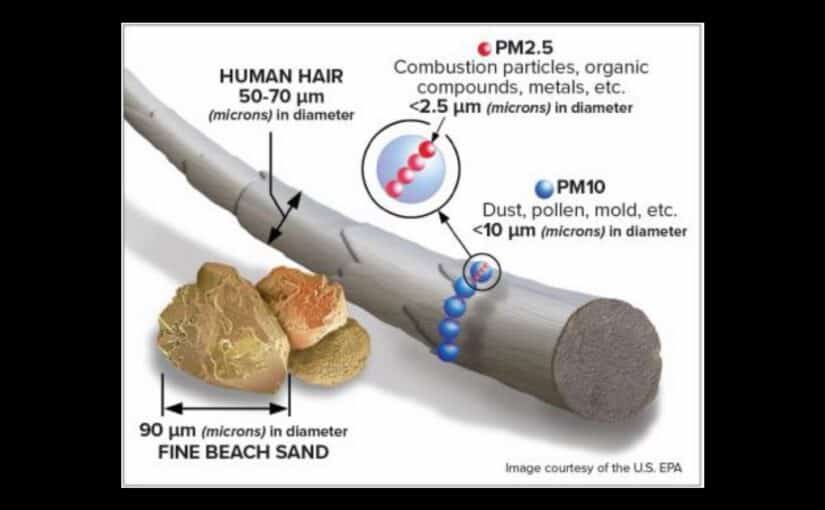
Fine particulate matter consists of tiny solid particles or liquid droplets in the air that are 2.5 microns or less in diameter. PM 2.5 can be made of many different types of particles and often comes from processes that involve combustion, including vehicle exhaust, power plants and fires, as well as from chemical reactions in the atmosphere.
Exposure can cause short-term health effects such as irritation to the eyes, nose and throat, coughing, sneezing, runny nose and shortness of breath. Exposure to elevated levels of fine particulate matter can also worsen medical conditions such as asthma and heart disease. People with heart or breathing problems, children and the elderly may be particularly sensitive to PM 2.5.
Officials said going indoors may reduce exposure when outdoor levels are elevated. However, if there are significant indoor sources of PM 2.5 — such as tobacco, candle or incense smoke, or fumes from cooking — levels inside may not be lower than outside. Ways to reduce exposure include minimizing outdoor and indoor sources and avoiding strenuous activities in areas where fine particle concentrations are high.
Additional information on ozone and PM 2.5 is available on DEC’s and DOH’s websites. A new DEC fact sheet about the Air Quality Index is also available on DEC’s website or by PDF download.
Residents can sign up to receive Air Quality Alerts through DEC Delivers, DEC’s email service. DEC also established a toll-free Air Quality Hotline at 1-800-535-1345 to keep New Yorkers informed of the latest air quality situation.
This article was prepared with the assistance of AI tools under the direction and editing of Robert Cox.
Discover more from Talk of the Sound
Subscribe to get the latest posts sent to your email.