

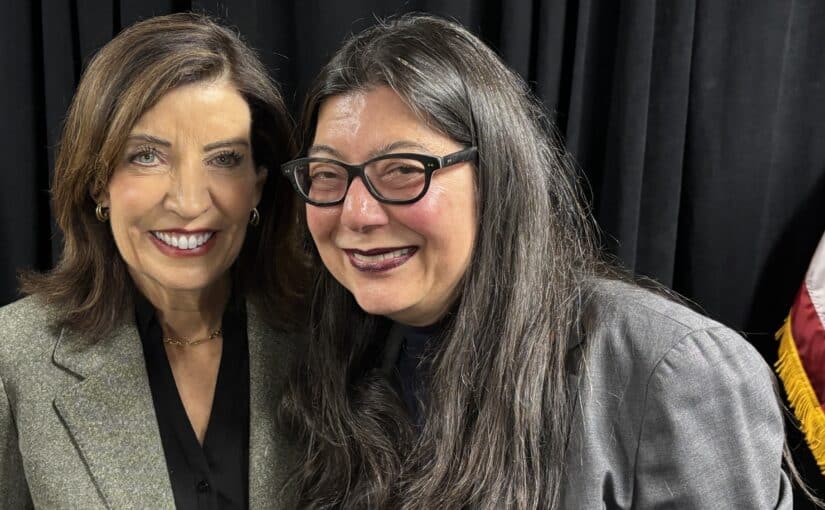
NEW ROCHELLE, NY (February 24, 2025) — Gov. Kathy Hochul announced $16 million in state funding for New Rochelle’s LINC project during a visit Wednesday morning to the Boys & Girls Club of New Rochelle’s Remington Clubhouse.
The funding restores support for the project, which will reconnect the Lincoln Zone now separated by Memorial Highway, after previously allocated federal dollars were withdrawn.
The Remington Clubhouse was selected as the site of the announcement due to its central location and longstanding role as a community partner. The club, located in the Lincoln Zone, serves youth from kindergarten through age 24, including middle school students, high school students and young adults. Youth from the clubhouse participated in a focus group on the LINC project, providing feedback on renderings and sharing their vision for multi-purpose green space, basketball courts, barbecue areas and improved walkability along Lincoln Avenue.
Approximately 60 state, county and local officials and community stakeholders attended, including New Rochelle Mayor Yadira Ramos-Herbert, Rep. George Latimer, New York State Senate Majority Leader Andrea Stewart-Cousins, Westchester County Executive Ken Jenkins, State Sen. Shelley Mayer, Assemblymember Steve Otis and Westchester County Board of Legislators Majority Leader Terry Clements.
The LINC project, short for Linking Innovation, Nature and Community, will transform a portion of Memorial Highway into a pedestrian-friendly corridor with green space, bike lanes and improved crossings. Originally constructed in the 1960s, the highway divided a historically Black neighborhood from downtown New Rochelle. City leaders have described the project as a long-term effort to restore connectivity, expand economic opportunity and support continued residential growth.
Gov. Hochul said the announcement ensures the project can proceed without delay. She also highlighted New Rochelle’s housing development activity, noting the city has built approximately 4,500 new homes since 2020 and issued more than 1,000 housing permits annually in recent years. She pointed to a reported decline in average rent growth of 3% to 5% as an example of how increased housing supply can advance affordability.
“This is about more than infrastructure,” Hochul said. “It is about reconnecting communities and building the housing and public spaces that allow people to live with dignity and opportunity.”
Mayor Ramos-Herbert said the funding restores momentum for a project that has remained a priority through years of planning and community engagement.
“When federal support was pulled, it was a setback, but it did not change New Rochelle’s resolve,” Ramos-Herbert said. “This funding puts us back on track to transform six lanes of highway into a connected public park that restores walkability, creates green space and unlocks economic opportunity for our residents.”
“For decades, Memorial Highway divided neighborhoods and limited opportunity,” Stewart-Cousins said. “The LINC project is about reconnecting communities, creating public space and ensuring that the benefits of growth are shared. Today’s commitment brings us closer to making that vision real.”
“There are two stories here, what partnership can create and what communities can achieve when leaders work in the same direction,” Latimer said. “New Rochelle is showing what it looks like to invest in connection, opportunity and progress.”
“As we recognize Black History Month, it is important that we confront not only achievements, but also the policies and infrastructure decisions that caused real harm,” Jenkins said. “This investment ensures the LINC will move forward and begin repairing that damage. It is about bringing people together and moving our community forward.”
With the state funding secured, the LINC project can continue into the next phase of implementation, with city and state partners moving forward to deliver new public space and improved connections between neighborhoods.
This article was prepared with the assistance of AI tools under the direction and editing of Robert Cox.