

Image Caption: Sam McVey provided a selfie with a man he identified as “Dr. Daniel Farl,” whom he described as his attorney. The individual’s identity and credentials have not been independently verified by Talk of the Sound. Photo taken at José María Córdova International Airport, Rionegro, on April 9, 2026.
DUBLIN, IRELAND (April 11, 2026) — Sam McVey called on Friday to dispute Talk of the Sound’s account of recents events in Colombia. As he talked fast and was describing places and people unknown to me, often using the Spanish-language pronunciation, I provided him a copy of my interview notes and asked him to review them and to correct any errors or misspellings which he did last night via text message.
The account in his statement was reviewed and approved by him. There are various claims by McVey in his account which we were unable to verify.
For readers not familiar with the area we put together a guide with maps and links. We also added links in his statement to identify people, organisations, locations, schools, and businesses.
Apple Map images of the relevant areas:

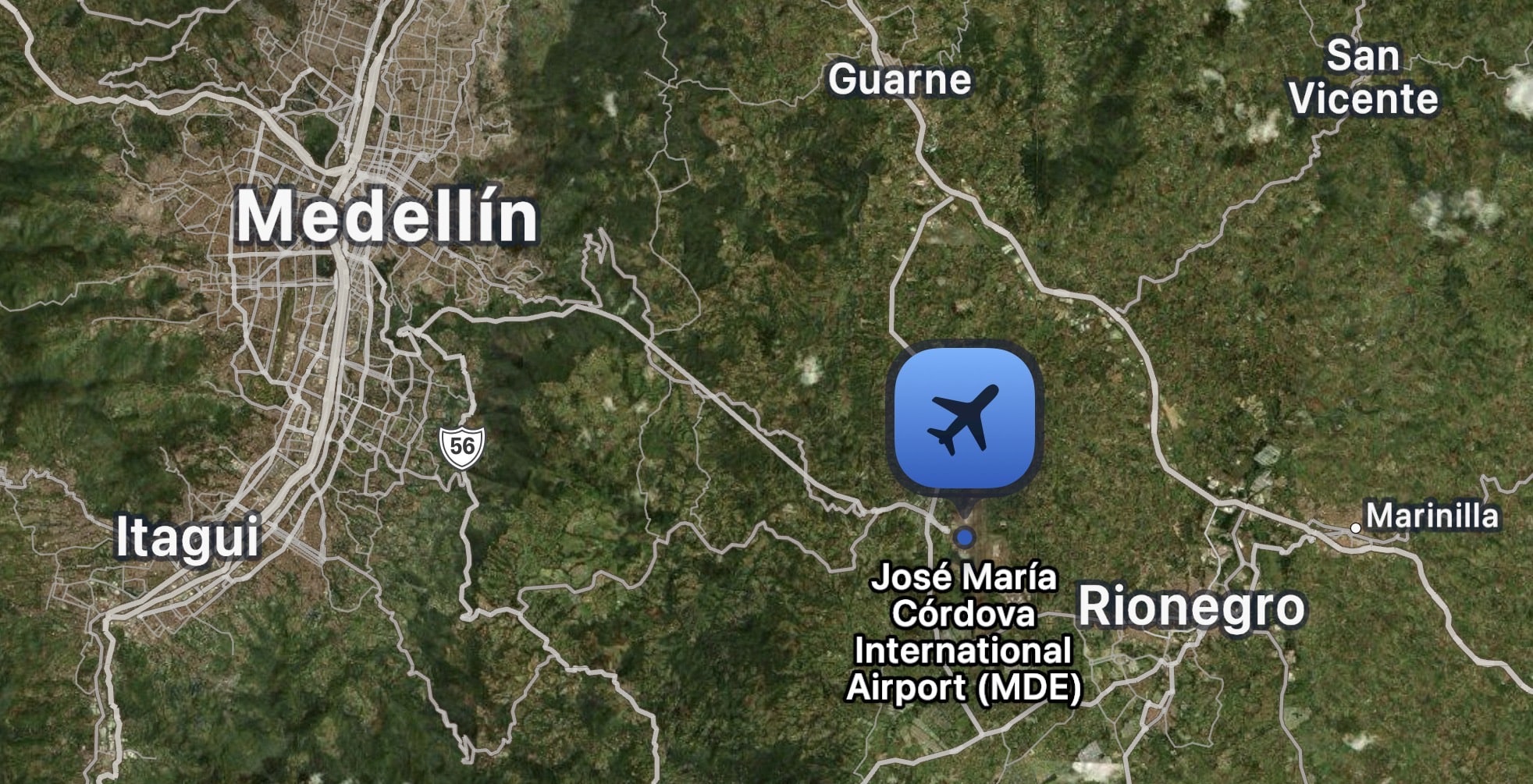

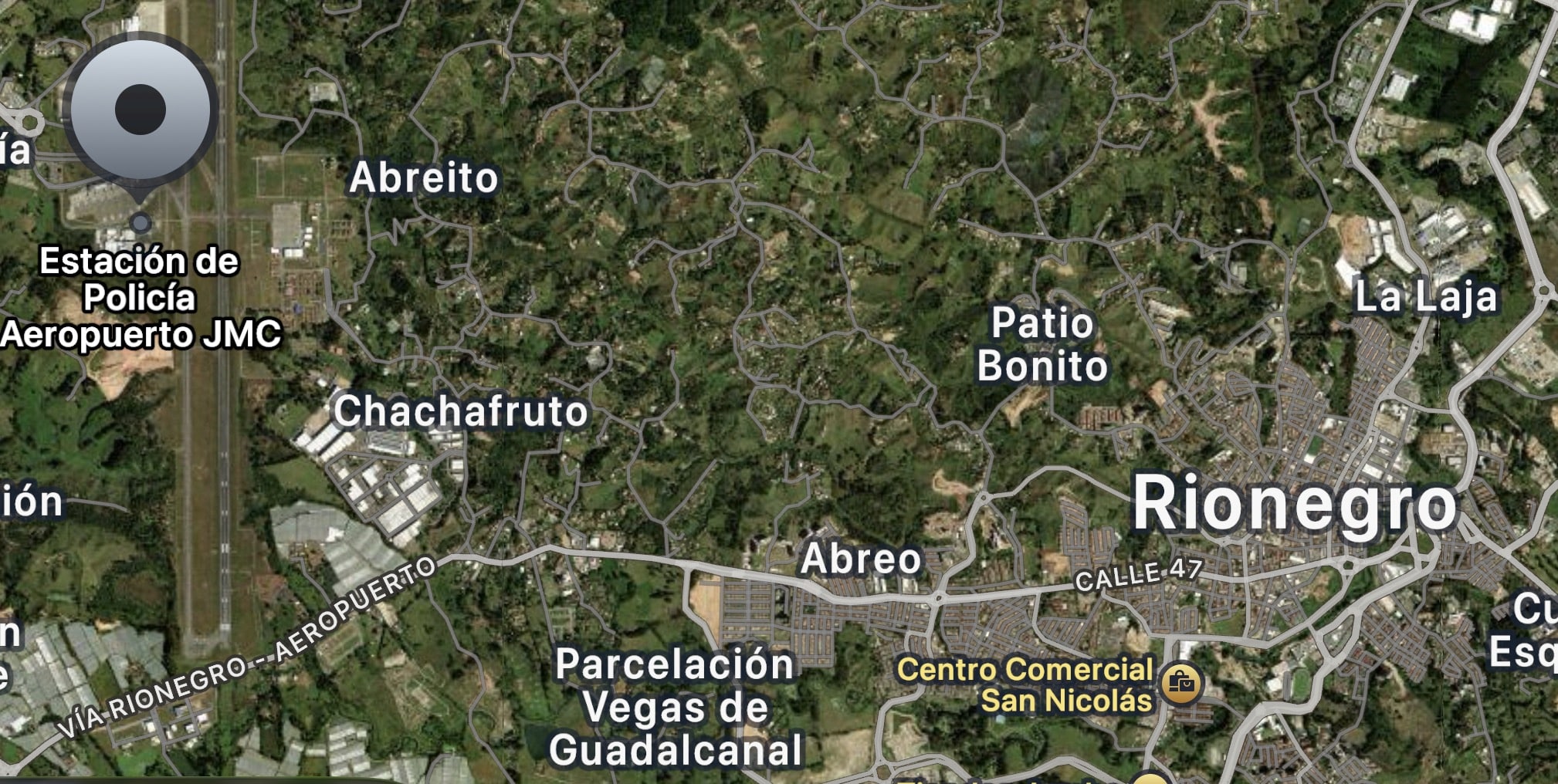

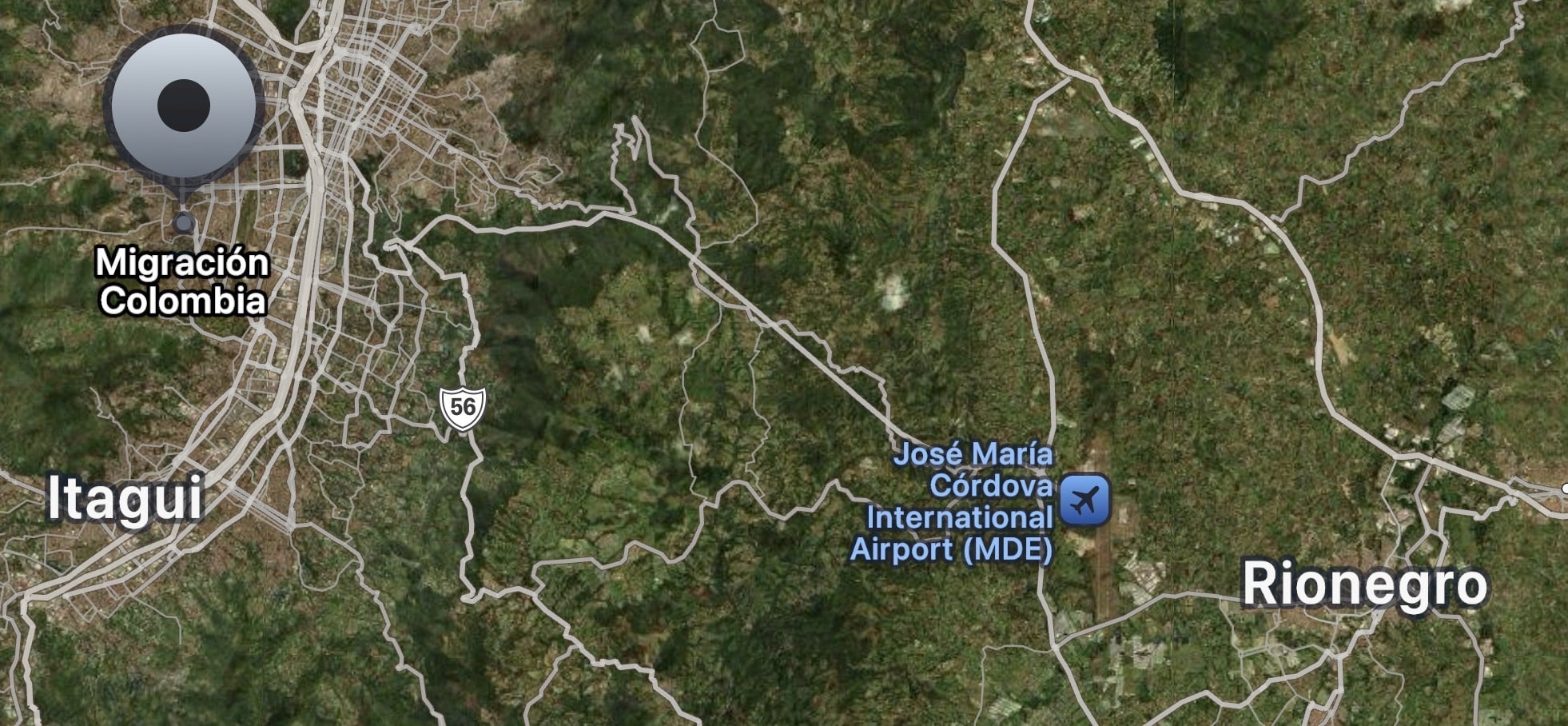

Almost all primary locations in this story — the finca, Club Campestre Llanogrande, Colegio Monteluna, Parque Comercial Jardines de Llanogrande with its Dollarcity store, the airport police station, and the José María Córdova International Airport — are all in the Río Negro area in eastern Antioquia. The immigration office is about a half hour away in Medellín.
Río Negro is a municipality in eastern Antioquia, a desirable suburban/rural zone on the outskirts of a Medellín about 30–45 minutes east of the city centre of Medellín. This upscale “campestre” zone features green valleys, private schools, fincas, country clubs, and shopping areas along Via Llanogrande and is close to the international airport in Medellín. All locations in the story lie along or near Via Llanogrande, the main road through this affluent suburban/rural pocket popular with wealthy families.
Several Instagram videos demonstrate the upscale nature of the area:
Finca Saint Michel Finca 7 is a private finca with a single-story house with a tiled roof and large garden which McVey rented on Airbnb. It is located in Sector La Palma, Callejón de los Arias, a quiet side lane off Via Llanogrande in the upscale campestre zone of Llanogrande, Rionegro, Antioquia. The property sits in a monitored rural security sector (“Zona Segura Vigilada”) with direct coordination to the National Police through the local Frente de Seguridad Rural program.
Club Campestre Llanogrande is an exclusive private golf and country club. It features an 18-hole golf course and premium sports facilities, and serves as a social hub for Medellín’s traditional wealthy elite — established business families, high-net-worth professionals, and influential locals. Membership is highly selective and expensive, typically passed down through generations, making it one of the most prestigious clubs in the region.
Colegio Monteluna is a private, secular, co-ed bilingual campestre school serving students ages 2 to 18 (preschool through high school) which attracts affluent upper-middle to upper-class families — typically well-educated professionals, business owners, and entrepreneurs from the eastern Antioquia region.
Parque Comercial Jardines de Llanogrande is a modern lifestyle shopping center in the upscale campestre zone of Rionegro. It includes supermarkets, cafes, restaurants, and services, catering primarily to affluent upper-middle-class and wealthy families who live in the desirable Llanogrande area near the international airport.
Estación de Policía Aeropuerto is the airport police station located directly on José María Córdova International Airport grounds in Vereda Sajonia, Rionegro. It falls under Distrito Seis de Policía Rionegro. From this station, the passenger terminal is a short walk.
Migración Colombia’s Centro Facilitador de Servicios Migratorios Medellín (also known as the Regional Antioquia office) is located in the Belén neighborhood of Medellín. This is the main administrative center where immigration matters involving foreigners are handled, including reviews, documentation, and conference calls with foreign embassies.
José María Córdova International Airport (MDE), commonly referred to as the “Medellín airport” (note: there is a small, domestic airport in the city of Medellín), is located in Rionegro, about 30–45 minutes from central Medellín. It is the main international airport serving the city, the location of the passport incident, the location of the airport police station and the departure point for a flight to Fort Lauderdale.
Via Llanogrande is the main road running through the upscale Llanogrande / Don Diego / Vereda Guayabito zone in eastern Antioquia. It is the central artery for the affluent campestre area where all the key locations in the story are clustered within a few minutes drive of each other:
- Finca Saint Michel Finca 7
- Club Campestre Llanogrande
- Colegio Monteluna
- Estación de Policía Aeropuerto
- Migración Colombia’s Centro Facilitador de Servicios Migratorios Medellín
- José María Córdova International Airport
- Parque Comercial Jardines de Llanogrande
- Brazilian jiu-jitsu academy is 111 Jiu-Jitsu Llanogrande
- Gym is Body Tech Llanogrande
- Dollar store is Dollar City en Rio Negro
- Bank is Bancolombia Sucursal Llanogrande
All five business are in or near the Parque Comercial Jardines de Llanogrande on Via Llanogrande in the Llanogrande area of Rionegro.
Talk of the Sound reached out to numerous individuals and organizations named in McVey’s statement and resume to seek comment or confirmation of his claims. Those contacted included:
Colombian government officials: Medellín Mayor Federico Gutiérrez Zuluaga, Antioquia Governor Andrés Julián Rendón Cardona, and Medellín City Council member Camila Gaviria.
Educational institutions: Universidad EAFIT, The Columbus School in Medellín, Fox Lane High School, Nathan Hale Middle School, Mount Vernon City School District, John Jay Middle School, Concordia College (now part of Iona University), Middlebury College, Fordham University, Manhattanville University, and Instituto Internacional in Madrid.
Professional organizations and affiliations: Fund for Teachers, INDER, the Association for Supervision and Curriculum Development (ASCD), American Educational Research Association (AERA), American Council on the Teaching of Foreign Languages (ACTFL), Connecticut Association of School Administrators (CASA), School Administrators Association of New York State (SAANYS), Learning Forward (formerly National Staff Development Council), and the International Society for Technology in Education (ISTE).
Other entities: Chase Bank, Migración Colombia’s Centro Facilitador de Servicios Migratorios in Medellín, the Estación de Policía Aeropuerto in Rionegro, Club Campestre Llanogrande, and the U.S. Drug Enforcement Administration.
We will update our reporting based on any replies.
This article was prepared with the assistance of AI tools under the direction and editing of Robert Cox.
Have information about this story? Email robertcox@talkofthesound (preferred) or contact via WhatsApp: +353 089 972 0669.
Sam McVey Account of Recent Events in Colombia
I was illegally detained in Colombia for over 24 hours from Wednesday, April 8, through Thursday, April 9, 2026, after which I left the country. This is my story.
I have been visiting Colombia since 2016, when I attended a friend’s wedding in Cartagena. In 2017, I returned on a grant from the Fund for Teachers. In 2019, I was in Bogotá meeting officials from the Ministry of Education and worked on an education project at Universidad EAFIT, a private university in Medellín. From 2020, I worked at The Columbus School in Medellín (Alto de Las Palmas, Envigado in the southern hills above Medellín, about 20–30 min from central Medellín) for about a year and a half to two years. After returning to the United States, I taught at Fox Lane High School, spent a year unemployed, and was hired by Isaac E. Young Middle School inNew Rochelle in September 2025.
I have a longstanding connection with Federico Gutiérrez Zuluaga, the Mayor of Medellín, who supports my efforts to open a bilingual school in the area. I also planned to meet with Andrés Julián, the Governor of Antioquia, to gain support for a private bilingual Catholic school I intend to establish in Llanogrande. Ironically, it was actions linked to the Governor’s office that led to false information being spread about me on social media and in local Medellín newspapers.
Because the Governor failed to speak with me directly or conduct proper due diligence, I was forced to leave Colombia yesterday. I still hope to meet with him in the future to secure support for the school. I plan to return in July for an amateur baseball event coordinated with the Mayor’s office to be held at Instituto para el Deporte y la Recreación de Medellín (INDER), a city government sports institute, headquartered in central Medellín, as well as a golf outing and tennis fundraiser at a country club in the El Poblado area of Medellín.
I had been back in Colombia since February 2026, initially planning to coordinate a baseball event during the New Rochelle schools mid-winter recess using funds raised in Fall 2025. I was actively interviewing for teaching positions, including at Universidad EAFIT, located in Southern Medellín, conveniently located near the airport highway, in the El Poblado area. I discussed leading courses in their International Business Department with a focus on sports — an area in which I am well qualified. At the same time, I was researching properties and considering purchasing land for the new school (one quote came in around 1.4 million, though advisors recommended renting given current prices). I was also advancing a project connected to my alma mater, the University of Southern California (USC), which involved outreach to both Federico Gutiérrez Zuluaga, the Mayor of Medellín and Andrés Julián, the Governor of Antioquia.

In early March, I rented Finca Saint Michel Finca 7, a finca (a farmhouse-style Airbnb) in Llanogrande, an upscale area near the airport that reminds me of Vermont, for about $200 per night. The finca was owned by Oscar Gómez, a professor at Pontificia Universidad Javeriana (PUJ) and his wife Liliana in the Laureles neighborhood of Medellín. While staying at the finca that weekend, I met Oscar Gómez in connection with the USC project. I had been discussing the USC project with him and his colleague, Carlos Andrés Bernal, also a professor at PUJ.
EDITORS’S NOTE: The main Pontificia Universidad Javeriana campuses are in Bogotá and Cali; the Medellín connection is through affiliated programs based in the Laureles area of western Medellín.
Colombia has many holidays and restrictions, and there had been an election that past Sunday during which buying, selling, and alcohol consumption were prohibited.
On Wednesday, I needed to leave Colombia temporarily because my Chase bank account in the United States had been closed, and I was having difficulty opening an account locally. I frequently travel through Fort Lauderdale on JetBlue, where I have accumulated significant mileage. I headed to the Medellín airport to fly back and sort out my banking. While in the immigration/customs line, I kept getting passed over. Frustrated after calling immigration and being told to wait, I stepped away, expressing my disappointment that Colombia was no longer the way it used to be. Officials took my passport for a time and ran a background check. I was worried about missing my flight, but an airline representative reassured me that I could take another the next day. The passport was eventually returned. While waiting, I remarked out loud that “everything happens for a reason.” The comment lightened the mood with those around me and helped me realize it was actually good that I would be staying in Medellín longer.
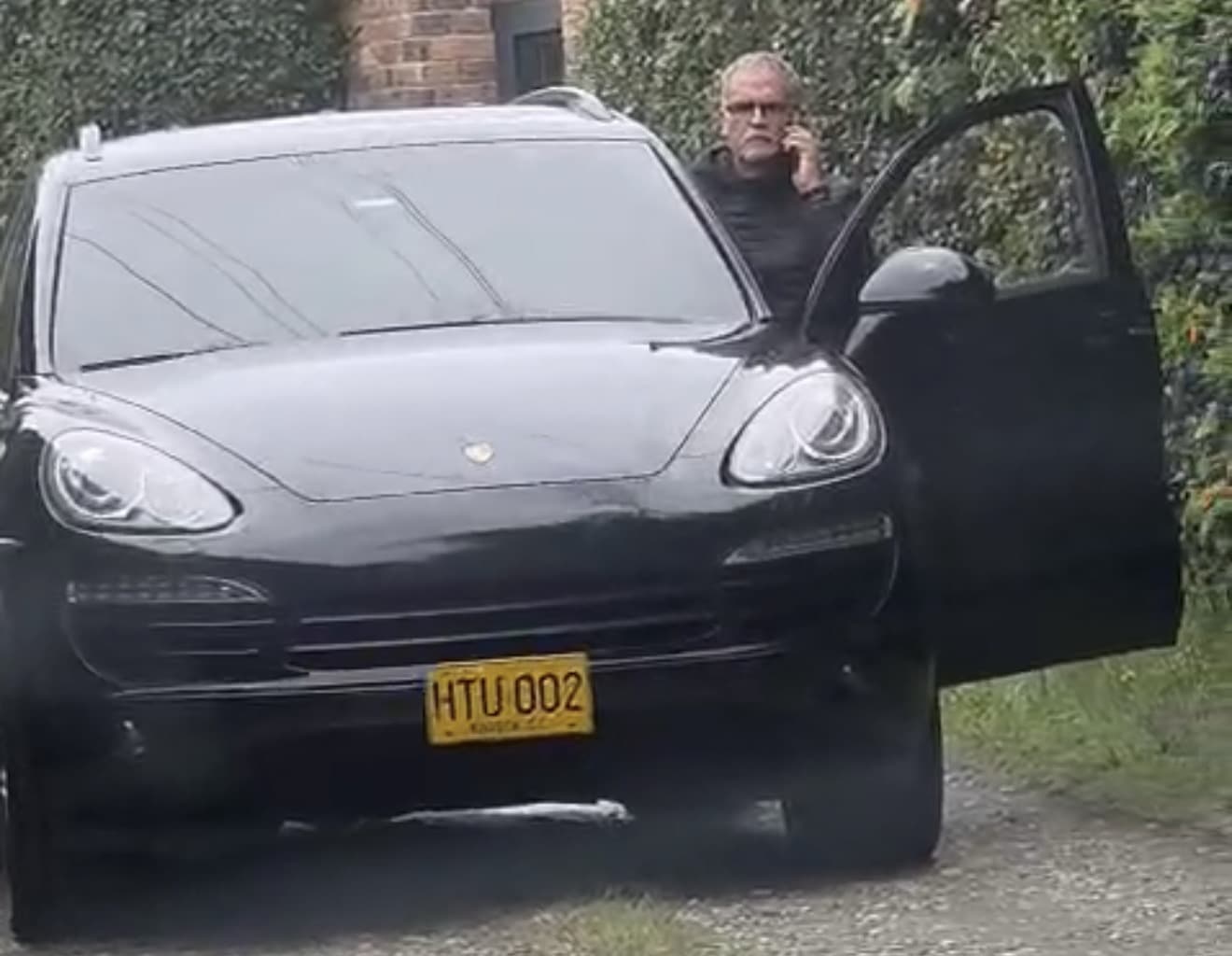
Later that day, I took a taxi back to Llanogrande for a meeting related to the USC project. I had been trying to reach Oscar, his wife Liliana, and Carlos, but they had blocked me on WhatsApp. When I arrived at the finca, Liliana confronted me and began calling and texting her husband and the police. Soon afterward, Oscar and Carlos pulled up in a Porsche Cayenne, blocking my taxi from leaving. Liliana appeared very nervous and repeatedly asked, “What are you doing here?” She had a bodyguard with her. The bodyguard got in my face, leading to a heated verbal exchange. I accused the bodyguard of being a narco trafficker — which he admitted (unverified) — and asked if he was carrying weapons. I dropped my book bag and suggested we settle it physically.
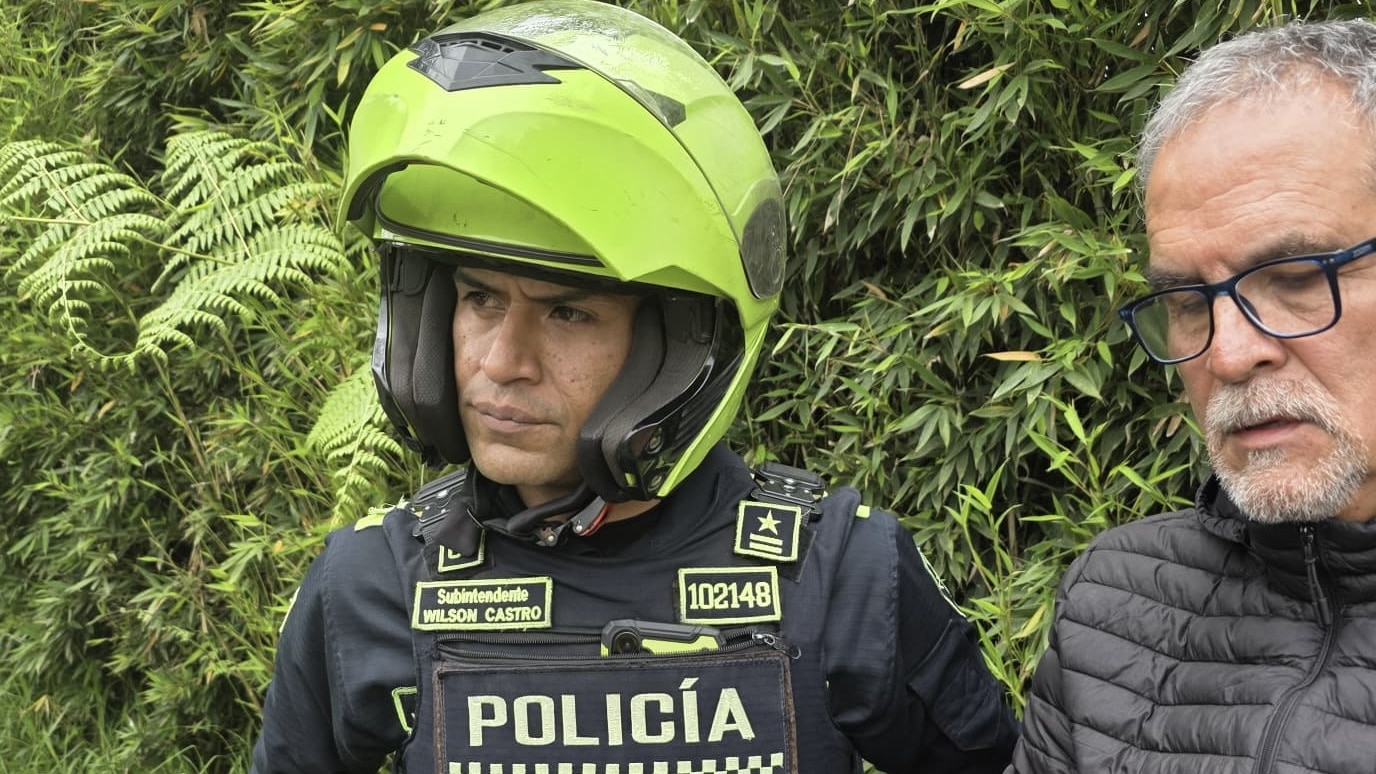
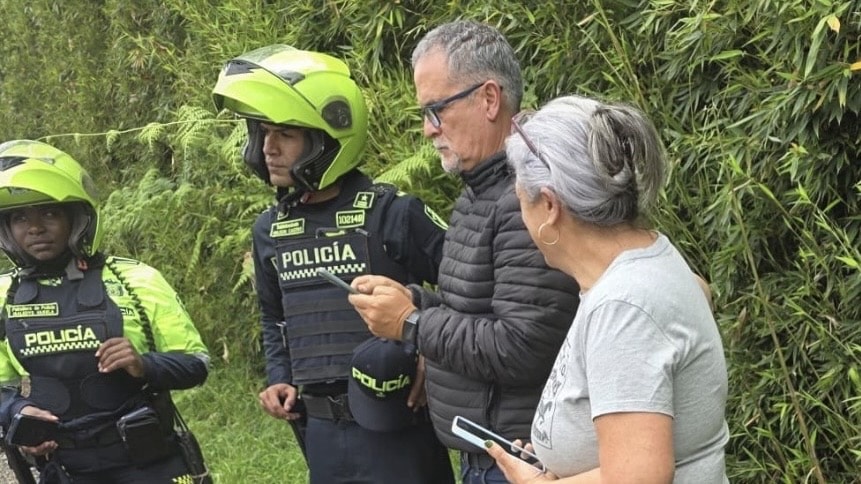
Before things escalated, two local police officers arrived and accused me of disturbing the peace.
I left the finca in the taxi, but as we drove away, the same two officers pulled the taxi over, drew their handcuffs. They said they would arrest me unless I paid the driver. I handed over 150,000 pesos (approximately $41 USD) and began walking back toward Medellín.

Shortly afterward, while walking, I passed Colegio Monteluna, a private bilingual school on Via Llanogrande in Rionegro, a city and municipality in Antioquia Department, Colombia, located in the subregion of Eastern Antioquia. The gate was open, so I entered and approached the door, saying I wanted to meet the director to discuss my ideas for a new school and sports program. The staff seemed receptive. However, outside there were three or four cars with parents waiting to pick up their children. A verbal altercation broke out with one of the fathers, who admitted being a narco trafficker (unverified). He asked, “What’s your fucking problem?” and said he had a gun but had left it in the car. The argument became heated. I told him, “Your kids go to this school — watch what I do,” and then I turned away from him walked into the school. This greatly agitated the parents, and the father called the police. The same two officers soon arrived again.
I continued walking down the road toward Club Campestre Medellin (also called Campestre Llanogrande, Medellín Country Club – Llano Grande Course or Llanogrande Country Club). I had been there before and knew some people there. A Colombian man with a beard and goatee, wearing a Yankees hat and glasses, pulled up in a car and kindly drove me two miles to the Club Campestre Medellin. I talked my way in to the club and met with the golf pro to discuss organizing a golf outing, either in July 2026 or July 2027. Later, a taxi was sent for me by my lawyer, who has connections to Federico Gutiérrez Zuluaga, the Mayor of Medellín.
That afternoon, I tried to open an account at Bancolombia but was unsuccessful. I also stopped at a Brazilian jiu-jitsu academy, a mall, a gym, and finally a dollar store, where I was shopping and carrying several bags.
Inside the dollar store, one of the mothers from Colegio Monteluna saw me and became visibly nervous. When she tried to pay, there was an issue with her credit card. As a light-hearted joke, I said “we follow the money,” pretending to sound like someone from the DEA.
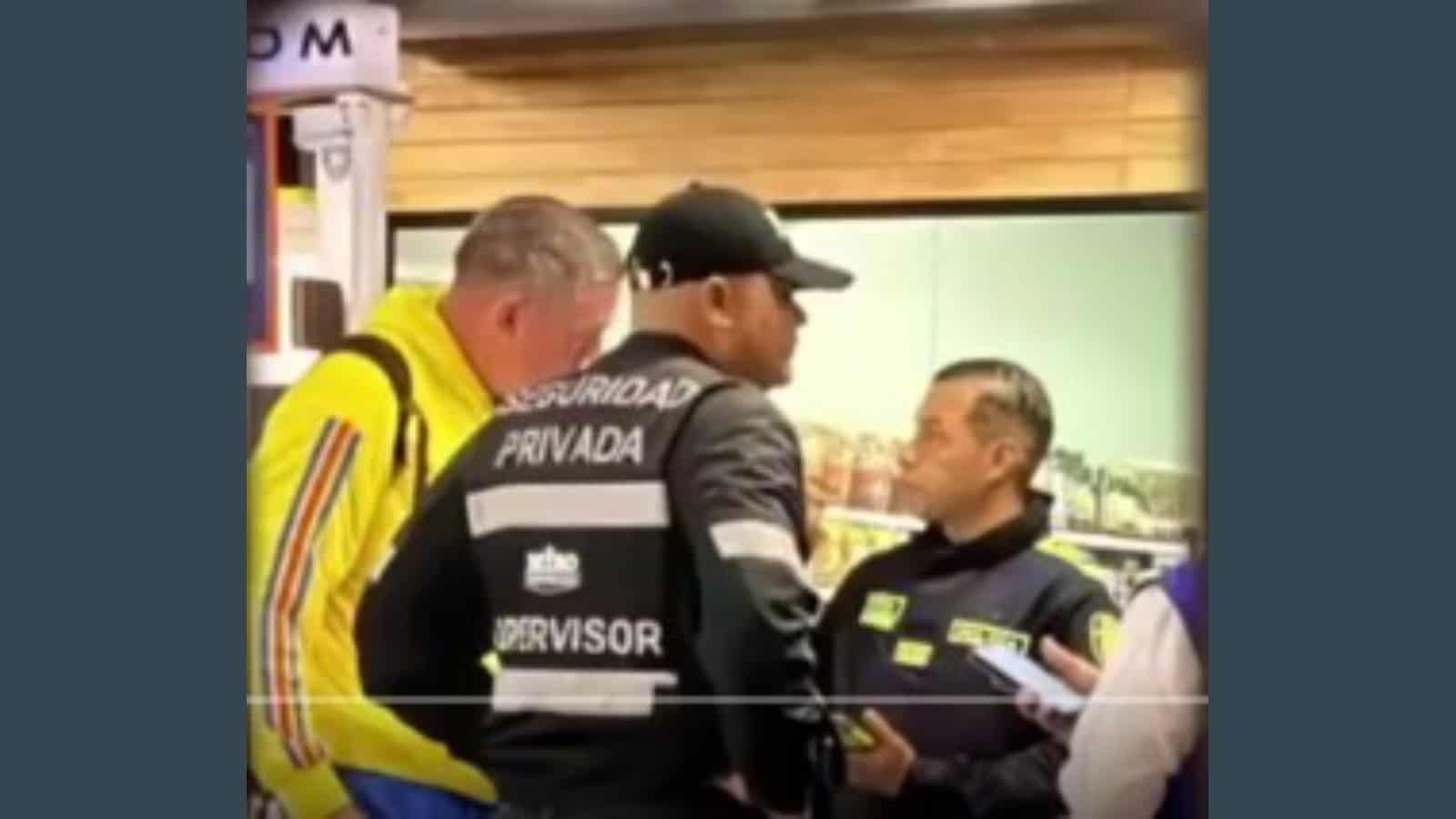
When I tried to leave, the security guard insisted on checking every item in my bag (I told him there were about 30 items) and kept me there while he went through them. I believe the store staff had called the police, who arrived once more.
The officers told me I was in danger because the father from the school had made numerous calls and stirred up trouble — “the whole school is after you.” They offered to escort me to a taxi, but I had to wait about 20 minutes. The father (the one I referred to as the “narco guy”) showed up and told the police I was crazy, claiming I had threatened to shoot the superintendent back in New York. I explained that was fake news. The police then said they needed to take me to the command/protection center in Río Negro for my own safety as paramilitary and narco groups might try to harm me. I was taken to the police command center at the José María Córdova International Airport (Rionegro Airport) to debrief with a police Captain and her team.
At the center, there was a jail cell with four or five officers present. Some were friendly, and I chatted with them, but they instructed me to stay inside the cell. I disliked it because there was no bed or mattress. A nurse came to see me that Wednesday night, and I was required to remain in the cell. A psychiatrist also visited; he was connected to the mayor’s office in Río Negro. They assured me I was not in trouble and advised me to contact my attorney in Medellín, who has ties to the mayor
On Thursday morning, The cops were super friendly to me and bought me breakfast. I went to the Medellín airport where I spoke with migration and immigration officials. They listened to my account and repeatedly said, “I believe you, I believe you.” The police then arrived to transport me back into Medellín to the Belen area. We passed the international departures zone, and I asked if I could simply leave, but instead they took me to Centro Facilitador de Servicios Migratorios (CFSM) Medellín in western Medellín. There, I participated in a conference call with Dr. Daniel Farl, my attorney, the director of immigration, and Mary Ellen Velez, State Department Consular Affairs officer from the U.S. Embassy in Bogotá. Velez said the State Department was fully aware of my detention and that I had been in contact with the DEA. She told me the police could only hold me for 36 hours without filing charges. She explained my rights. I was provided a Privacy Act document. The matter was resolved, and I was released.
I later learned that the father from the school is connected to a senator who is linked to the governor of Antioquia, which I found deeply ironic given that I had been trying to meet the governor to improve sports programs. The father had been telling people that gringos come to Colombia only for sex tourism and drugs.
After my release, a car was sent to pick me up and take me to the airport. I then flew to Fort Lauderdale. My main reason for returning to the United States at that moment was the ongoing bank account issues — Chase had closed my account, leaving me without access to funds.
The moral of the story is that anyone wishing to open a private bilingual Catholic school in Llanogrande must understand the region’s complex history, including its armed conflict, and learn to live peacefully among the leaders of its many different groups. See the current U.S. Embassy travel advisory for Colombia.
Overall, these events stemmed from big misunderstandings. The confusion with the Governor’s office was cleared up on Thursday. He is currently addressing the issue with the police and the narco parent. The DEA in Washington, D.C. and the US Embassy in Bogota are fully aware of the situation
Please note, I do NOT WORK FOR THE DEA.
I plan to return to Colombia in July to continue advancing the USC project. I’m excited to return in July, possible sooner and invite anyone from New Rochelle to join me, especially Yankee fans.