
NEW ROCHELLE, NY (June 9, 2026) — On May 17, 2026, Talk of the Sound asked Natasha Fapohunda, Chairperson of the New Rochelle Civilian Complaint Review Board, whether she had “considered resigning publicly to draw attention to the CCRB’s failure to become operational.”
The next day, she quietly resigned.
She never answered that question. She never answered any of the 17 questions Talk of the Sound sent her. And in nearly a year as Chairperson, she never convened a single meeting.
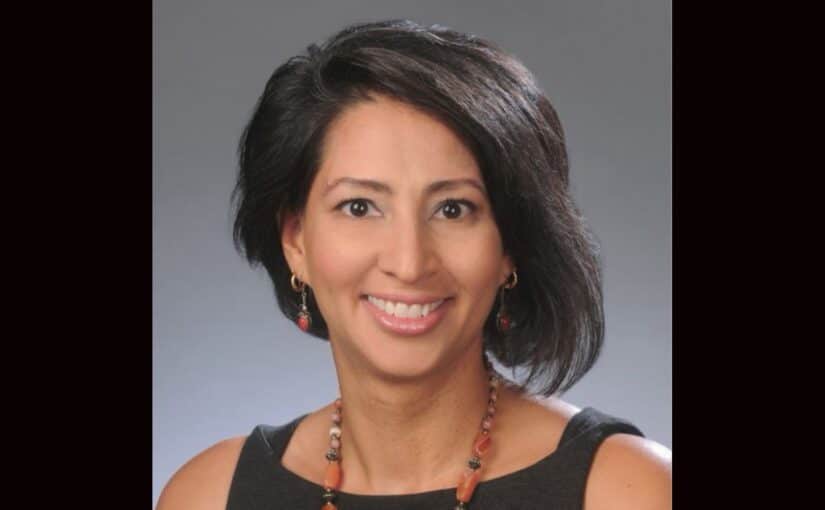
Fapohunda understood her role. She is a senior attorney at Mastercard, where she serves as Senior Vice President, Counsel for Enterprise Partnerships, based in Purchase, New York. She holds a law degree from Georgetown University Law Center and is a member of the Leadership Council on Legal Diversity and the Her Honor Mentoring program.
Under the New Rochelle city code, the CCRB Chairperson is required to convene a public meeting every month and to issue a semi-annual report. Fapohunda served as Chairperson from the board’s seating in July 2025 until her resignation on May 18, 2026. In that time, no meeting was ever held, no semi-annual report was ever issued, and as of May 2026 the city confirmed no stipends have been paid to any CCRB members.
The semi-annual report due December 31, 2025 was never produced. A second report is due June 30, 2026 — three weeks from today. Whether that report will be issued, by whom, and whether the board will finally hold its first meeting remain open questions as the City Council meets tonight to appoint Fapohunda’s replacement.
Five Years, Three Bodies, Zero Meetings
Fapohunda’s resignation ends a five-year involvement in New Rochelle police oversight efforts that is, by any measure, unique. She is the only person who served as a member on all three successive police oversight bodies the city created in the wake of George Floyd’s death and the killing of Kamal Flowers.
She served on the 2020 Police Review Committee — established pursuant to Governor Cuomo’s Executive Order 203, issued June 12, 2020 in response to the nationwide protests following the death of George Floyd on May 25. The order took on particular local urgency: one week before it was issued, on June 5, 2020, New Rochelle Police Officer Alec McKenna had shot and killed Kamal Flowers, 24, following a traffic stop. She then served on the Community-Police Partnership Board from 2021 through 2024 — the three-year body that developed the CCRB framework. She was designated Chairperson when the CCRB was seated in July 2025.
Despite five years of involvement across three successive oversight bodies, the CCRB never held a single meeting under her leadership.
Nobody — police officers, city staff, other government officials, or community members — served on all three bodies except Fapohunda.
The NACOLE Questions She Never Answered
Among the 17 questions Talk of the Sound sent Fapohunda on May 17 were whether she had a prior relationship with NACOLE — the National Association for Civilian Oversight of Law Enforcement — before the legislation was adopted in October 2024; whether she advocated for NACOLE’s inclusion in the legislation; and whether she disclosed any such relationship to the Community-Police Partnership Board or City Council.
NACOLE is named specifically by name in the New Rochelle city code as a required CCRB training provider. In more than 20 years of covering New Rochelle city government, Talk of the Sound has never seen a specific vendor named by name in a city ordinance. NACOLE ultimately could not deliver the full statutory curriculum, declining to cover two required topics and delivering nine hours of training against a 9.75-hour code requirement.
When NACOLE’s Executive Director disputed Talk of the Sound’s characterization of the organization’s training model, Talk of the Sound responded by quoting NACOLE’s own website — a website whose virtual training events page listed no events, whose webinars page listed no events, and whose regional training program had been dormant until 2025. Talk of the Sound published a standalone story on June 2, 2026 documenting the dispute. There will be no correction.
Fapohunda never answered the NACOLE questions. She never answered any questions.
What Comes Next
According to a memorandum from City Manager Wilfredo Melendez presented to the City Council today, Council Member Shane Osinloye has selected Michael Cammer to fill Fapohunda’s unexpired District 4 membership term through June 30, 2028, and to complete her Chairperson term through June 30, 2026. The resolution also calls for the appointment of a Chairperson for the term beginning July 1, 2026 through June 30, 2027. That name is blank in the resolution as submitted. Both appointments are subject to City Council approval at tonight’s meeting.
UPDATE: The City Council did not act on the Cammer appointment at tonight’s meeting. Before entering executive session, council members referenced prior discussions about a possible co-chair arrangement — a concept not addressed in the city code, which provides for a single Chairperson. No appointment was made and no chairperson was named. The matter was deferred to the June 16, 2026 regular legislative meeting. The District 4 seat and the Chairperson position remain vacant.
The questions now facing the board and the city are straightforward: Will the CCRB hold its first meeting this month — nearly a year after it was seated? Will the semi-annual report due December 31, 2025 ever be produced? And can the public expect the report due June 30, 2026 to be issued on time?
This story will be updated following tonight’s City Council meeting.
New Rochelle CCRB: Talk of the Sound and Words in Edgewise articles on the New Rochelle Civilian Complaint Review Board and its predecessor, the Community Police Partnership Board linked here.
Appendix: Questions
QUESTIONS TO NATASHA FAPOHUNDA
Sent May 17, 2026. No reply to any question. Fapohunda resigned May 18, 2026.
Q40: As Chairperson, have you called or attempted to call an initial meeting of the CCRB?
Q41: Are you in contact with the other board members? Have any members completed any portion of the required training?
Q42: Has NACOLE been contacted about providing the required training?
Q43: Sec. 9-118C states that in the absence of complaints to review, meetings shall be used for training and continuing education. This means the board can meet before training is complete. Why has it not done so?
Q44: There is substantial work the board could do without reviewing case files — adopting rules, developing report formats, building operational procedures. Why has none of this happened?
Q45: The Citizens Police Academy has not been offered in 2026 to date and there are no plans to schedule it. The police department controls the training requirement for the board that oversees it. Do you believe this arrangement gave the police department a mechanism to block the CCRB from becoming operational simply by not offering the training?
Q46: At the July 9, 2024 City Council meeting you flagged that a community member missed the June 4 CPPB meeting before the Zoom vote on pre/post discipline review. Who was that community member? Did they vote with the majority? Do you believe someone who missed the final debate was adequately informed to cast the deciding vote?
Q47: Reynolds responded to your remarks at the July 2024 Council meeting by saying “someone who is not here again” — a phrase that could refer to Rev. Holder, who was also absent that day and had missed prior CPPB meetings. Was Rev. Holder the community member you were referring to?
Q48: The CPPB had no genuinely independent civilian members (except maybe you) — every member had some financial relationship with the city, county, or state. Do you consider yourself to have been an independent voice? Which other members, if any, do you consider to have been genuinely independent?
Q49: You were selected as Chairperson by the City Council with Mayoral approval before the board had ever met. Do you consider external appointment appropriate? Would you have preferred the board elect its own officers?
Q50: Resolution 2025-102 states members “may be” law enforcement, contradicting the city code. Are you aware of this? Does the city intend to correct it?
Q51: Three members are approaching the halfway point of their two-year terms without the board ever convening. How do you respond to that?
Q52: Have you been receiving your stipend? Do you believe receiving compensation for a board that has never met is justified? Would you consider returning the stipend?
Q53: Have CCRB members generally been receiving their stipends? If not, what does that say about whether the city considers the board to be functioning?
Q54: The Kane case — the most significant NRPD disciplinary matter since the CCRB was legislated — proceeded without any CCRB review. Do you have any concerns or regrets about that?
Q55: Do you feel personally responsible for the board’s failure to convene in nearly a year? Have you expressed frustration or alarm to city officials? Have you considered resigning publicly to draw attention to the CCRB’s failure to become operational?
Q56: You served on the Police Review Committee in 2020 and the CPPB from 2021 to 2024. In your view, what is different about the CCRB that will produce a different outcome?
QUESTIONS TO CITY MANAGER WILFREDO MELENDEZ
Inquiries sent May 17, May 20, May 22, and May 26, 2026. No response received.
1. Resolution 2025-102 states members “may be” a present or former police officer. The code states “No member may be.” Were you aware of this contradiction before Talk of the Sound raised it? What steps are planned to correct it?
2. You acknowledged in writing on April 13, 2026, that the board could meet before training was complete. Why has it not met since then?
3. The first semi-annual report was due December 31, 2025. Who is responsible for ensuring it is produced? When will it be issued?
QUESTIONS TO DEPUTY CITY MANAGER TODD CASTALDO
Inquiries sent May 17 and May 20, 2026. No response received.
1. Who recommended NACOLE as a CCRB training provider?
2. Was any review conducted of NACOLE’s training model before NACOLE was named in the legislation?
3. Why was no RFP issued for CCRB training providers?
4. The Monroe University training was arranged without a board vote. On what authority?
5. What is the contractual and financial arrangement with Monroe University — contract, MOU, invoices, payment?
6. What is the contractual and financial arrangement with NACOLE — contract, invoices, payment?
QUESTIONS TO NACOLE / CAMERON McELLHINEY
Inquiries sent May 17, May 18, and May 22, 2026.
May 17, 2026
Q70: Has the City of New Rochelle or any CCRB member contacted NACOLE about providing training required under Sec. 9-117C of the city code?
Answered May 18: Yes. Three sessions held March 16, March 25, April 8. Initially contacted “last year,” delayed by contracting and scheduling issues.
Q71: What would be the process and timeline for NACOLE to provide new-board-member training to a newly constituted civilian oversight body?
Not directly answered.
May 18, 2026
Q1: Can you confirm the total number of training hours provided across the three sessions? Were all 9.75 hours completed, or is additional training still required?
No reply.
Q2: Were all seven members present for all three sessions, or did attendance vary? If attendance varied, can you indicate which members attended which sessions?
No reply.
Q3: Were the sessions conducted in person or via video conference?
No reply.
Q4: The city code specifies that NACOLE training must be provided by “representatives of NACOLE or other qualified trainers selected by the members of the CCRB.” Can you confirm how the trainers were selected — was this done by the board members themselves, or was NACOLE engaged directly by the city?
No reply.
Q5: You mentioned the city initially contacted NACOLE last year. Can you confirm approximately when that initial contact was made?
No reply.
Q6: Is NACOLE’s training component now complete, or are additional sessions planned?
No reply.
May 22, 2026
Q1: Do you know how NACOLE came to be named in the legislation? Were you or anyone at NACOLE consulted before the legislation was adopted?
No reply.
Q2: NACOLE’s training is primarily delivered at your annual national conference. New Rochelle contracted with NACOLE for on-site — and ultimately virtual — bespoke training delivery. Is that type of engagement typical for NACOLE, or was New Rochelle an unusual arrangement?
Answered June 2: New Rochelle was not unusual. NACOLE regularly provides customized training and technical assistance to oversight agencies beyond its annual conference.
Q3: When New Rochelle approached NACOLE, NACOLE declined to cover two required curriculum topics — “Systemic racism in law enforcement” and “Equity & Inclusion” — stating those were better addressed by a historian or DEI specialist. Were those topics outside NACOLE’s standard curriculum before New Rochelle approached you, or was this a specific decision made in relation to the New Rochelle engagement?
Answered June 2: Confirmed. “Systemic Racism in Law Enforcement” and “Equity & Inclusion” are not part of NACOLE’s standard curriculum. NACOLE recommended those topics be delivered by specialists.
Q4: The insurance requirements the city imposed on NACOLE caused significant delays. Does NACOLE typically carry that type of insurance for on-site training engagements? Was New Rochelle’s insurance requirement unusual?
No reply.
Q5: Does NACOLE have any prior or existing relationship with CGR?
No reply.
Q6: Does NACOLE have any prior or existing relationship with any member of the New Rochelle City Council, any CPPB member, any New Rochelle city official, or any other individual involved in developing the legislation?
No reply.
Q7: Was anyone at NACOLE aware that they were being named in the New Rochelle city code before the legislation was adopted in October 2024? If so, who informed NACOLE and when?
No reply.
Q8: How did the initial contact between NACOLE and the City of New Rochelle come about? Our records show that Rita Azrelyant emailed NACOLE’s Tina Barr on January 10, 2025, referencing an earlier conversation and an already-existing proposed scope of work. When did that earlier conversation occur, and who initiated it?
No reply.
Q9: Before agreeing to contract with New Rochelle, did NACOLE consider whether this type of engagement was within its operational capacity?
No reply.
Q10: The training NACOLE delivered — nine hours across three virtual sessions — fell short of the 9.75 hours required by the city code and excluded two required curriculum topics. In your assessment, did NACOLE fulfill the training obligations specified in the New Rochelle city code? If not, does NACOLE consider its contractual obligations to the city complete?
No reply.
Q11: Did anyone at NACOLE raise concerns before contracting that NACOLE was not positioned to fulfill the full statutory training requirement? If so, were those concerns communicated to the city?
Answered June 2: NACOLE clearly communicated to the city what topics it was prepared to cover and what topics should be addressed by specialists. McEllhiney states she is not aware of any concern that NACOLE could not fulfill the portions of the training it agreed to undertake.
Q12: Would NACOLE recommend itself as a named provider in a city ordinance for this type of bespoke compliance training? Or would you recommend a different approach?
No reply.
This article was prepared with the assistance of AI tools under the direction and editing of Robert Cox.
Have information about this story? Email robertcox@talkofthesound.com (preferred) or contact via WhatsApp: +353 089 972 0669.