

NEW ROCHELLE, NY (October 3, 2026) — The New Rochelle Board of Education has begun a process that could reshape how students are assigned to schools, how the district uses its buildings and where some educational and support programs are delivered over the remainder of the decade.
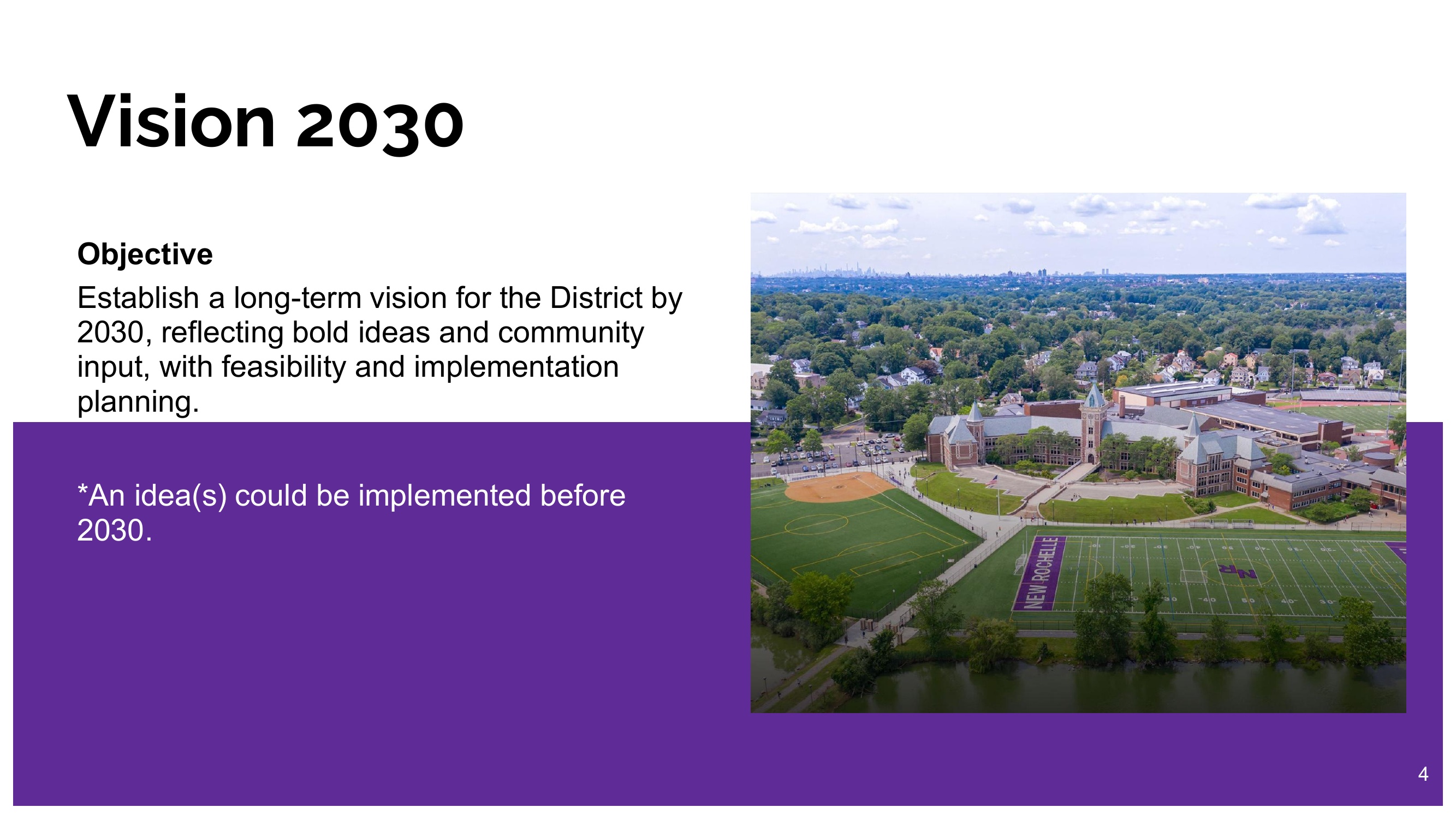
The Board used its Sept. 24 meeting to publicly discuss “Vision 2030,” an initiative the district describes as an effort to “establish a long-term vision for the District by 2030, reflecting bold ideas and community input, with feasibility and implementation planning.” The district said some ideas could be implemented before 2030.
The discussion was the first of four phases outlined by the district: Board idea generation and framing; community engagement and feedback; Board selection and direction to the superintendent; and superintendent-led working groups.
According to the presentation, the Board had already revisited ideas from the 2025-26 school year, engaged in small-group conversations, conducted preliminary research, scheduled quarterly retreat days and sought input from counsel.
The district presented four ideas carried forward from 2025.
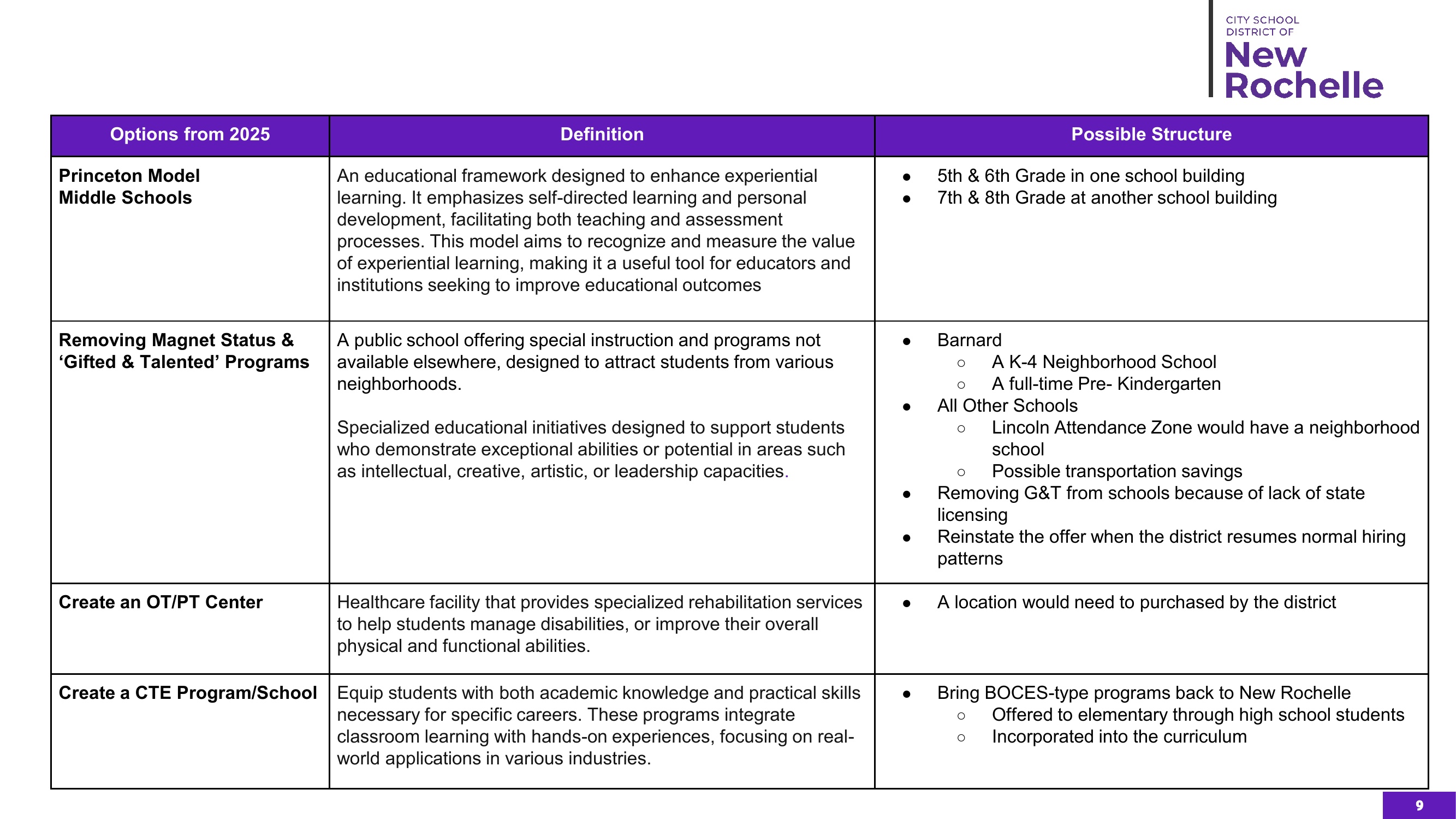
The first, described as the “Princeton Model,” would potentially reorganize the district’s two middle schools, placing fifth- and sixth-grade students in one building and seventh- and eighth-grade students in the other.
The second would reconsider the district’s elementary magnet and gifted-and-talented structure. Possibilities presented by the district included turning Barnard into a K-4 neighborhood school with full-time prekindergarten, providing a neighborhood school for students living in the Lincoln Attendance Zone, potentially reducing transportation costs and removing gifted-and-talented designations because of what the presentation described as a lack of state licensing.
A third option would create a centralized occupational therapy and physical therapy center. The presentation said the district would need to purchase a location.
The fourth would create a Career and Technical Education program or school in New Rochelle, bringing programs now associated with BOCES into the district and potentially incorporating CTE programming from elementary through high school.
The district made clear that none of the four ideas had been selected for implementation and that financial feasibility would be considered later in the process.
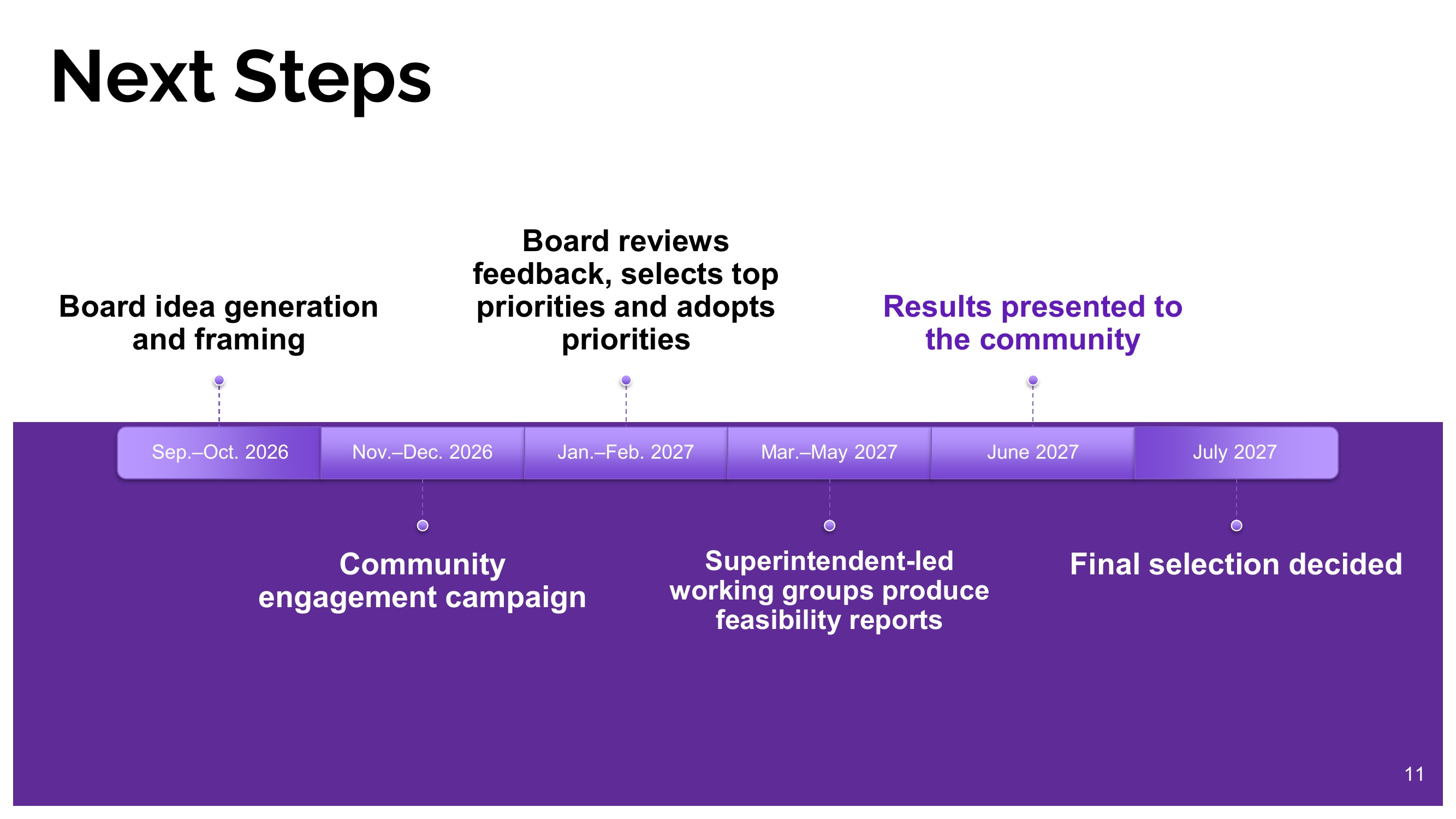
The schedule presented by the district calls for Board idea generation and framing during September and October, followed by a community engagement campaign in November and December. The Board would review community feedback and select priorities in January and February 2027. Superintendent-led working groups would then conduct feasibility studies from March through May, with results presented to the community in June and final selections made in July.
The district said it intends to provide at least three community engagement opportunities and reach at least 500 stakeholders through surveys, town halls, forums and other means. Residents can also speak at Board meetings or contact the Board at boe@nredlearn.org. A survey and community forum are planned for November, with additional engagement scheduled through November and December.
The Sept. 24 presentation and discussion raised far more questions than can reasonably be addressed in a single article. Some emerged through Board discussion. Others were raised by members of the public during public comment. Still others emerged during a subsequent review of the meeting and related public records.
The following are 20 questions that appear most important to raise first as the district prepares to begin its community engagement process. Where a question was raised through Board discussion or by an identified member of the public, that is noted.
This is not intended to be a final list. Talk of the Sound will continue reporting on the issues raised during the Sept. 24 meeting and will track additional questions that emerge from Board discussions, public comments, reader responses and further reporting. At the conclusion of the series, those questions will be compiled into a comprehensive Vision 2030 Question Bank, organized by subject matter.
The goal is to provide residents with useful information and questions as they participate in the district’s community engagement process. Readers who believe an important question has been overlooked are encouraged to leave it in the comments or contact Talk of the Sound. Relevant questions will be added to the Question Bank as the reporting continues.
- What demographic and enrollment projections for 2030 is the district using to evaluate the Vision 2030 options, and how were those projections incorporated into development of the four ideas?
- What role, if any, did the district’s existing Western Suffolk BOCES demographic, enrollment and long-range planning studies play in developing Vision 2030, and was the Planning and Facilities Study the district said in 2024 it was working with BOCES to obtain ever completed?
- What is the current enrollment and usable capacity of each district school, and what does the district project those figures will be through 2030? (Raised through Board discussion.)
- Under the proposed Princeton Model, how many students would attend the fifth- and sixth-grade school and how many would attend the seventh- and eighth-grade school, based on current enrollment and projected enrollment through 2030? (Raised through Board discussion.)
- What research supports the educational benefits attributed to the Princeton Model, and what have been the academic, social and operational results in comparable school districts that use it? (Raised through Board discussion.)
- What would be the transportation, traffic, scheduling and financial effects of moving every district student between elementary school, a fifth- and sixth-grade building, a seventh- and eighth-grade building and New Rochelle High School? (Raised through Board discussion.)
- What effect could changing school configurations and attendance patterns have on families’ decisions to remain in the district, enroll in private or charter schools or move elsewhere? (Raised by Alison Rivers, Jessica Klein and other speakers during public comment.)
- Are students who live in the Lincoln Attendance Zone currently eligible to participate in the lottery for the district’s magnet programs? If not, what is the basis for that restriction?
- What problem is the district seeking to solve by removing magnet status from Barnard, Columbus and Webster, and what educational, enrollment, transportation and financial effects would result? (Raised through Board discussion and by members of the public during public comment.)
- What would happen to Kaleidoscope and other advanced-learning opportunities if the district changes or eliminates its current gifted-and-talented structure, and how would students qualify for comparable programming under a new system? (Raised through Board discussion and by Jessica Klein during public comment.)
- What state licensing or certification requirements apply to teachers providing gifted-and-talented or advanced-learning instruction, and what specifically does the district mean when it says its existing programs present a state licensing issue? (Raised through Board discussion.)
- How many additional prekindergarten students does the district expect to serve by 2030, how many are expected to be served in district buildings compared with community-based organizations, and how is that growth being incorporated into enrollment and facilities planning? (Raised through Board discussion.)
- What problem would a centralized OT/PT center solve that cannot be addressed through the district’s existing delivery of occupational and physical therapy services, and what would be the educational advantages and disadvantages of centralizing those services? (Raised through Board discussion and by occupational and physical therapy practitioners during public comment.)
- What would it cost to purchase, renovate, equip, staff and operate an OT/PT center, and how much of those costs would qualify for state aid? (Raised through Board discussion.)
- How many New Rochelle students currently participate in Career and Technical Education programs through Southern Westchester BOCES, what programs do they attend, what does the district spend on tuition and transportation, and how many students who want CTE placements are unable to obtain them? (Raised through Board discussion and by Myriam Decime during public comment.)
- Why were vocational and trades programs previously discontinued in New Rochelle, and what has changed educationally, financially or in student demand that might support bringing those programs back? (Raised by Myriam Decime during public comment.)
- What would it cost to establish CTE programs in New Rochelle, what facilities, equipment and appropriately certified staff would be required, and how would those costs compare with continuing to use BOCES programs? (Raised through Board discussion.)
- What alternatives to the four options presented Sept. 24 have been considered, and what opportunities will residents have during community engagement to propose alternatives rather than simply react to the four existing ideas? (Raised through Board discussion and by Vincent Malfetano during public comment.)
- Does the schedule — community engagement in November and December, Board selection of priorities by February and feasibility studies afterward — provide enough time for residents to evaluate proposals that could change school assignments, programs, transportation and facilities? (Raised by Vincent Malfetano during public comment.)
- Before the Board selects Vision 2030 priorities, what information will residents receive about enrollment, facilities, educational outcomes, transportation, staffing, capital costs, operating costs and state aid so they can evaluate the alternatives on the same factual basis? (Raised through Board discussion and by members of the public during public comment.)
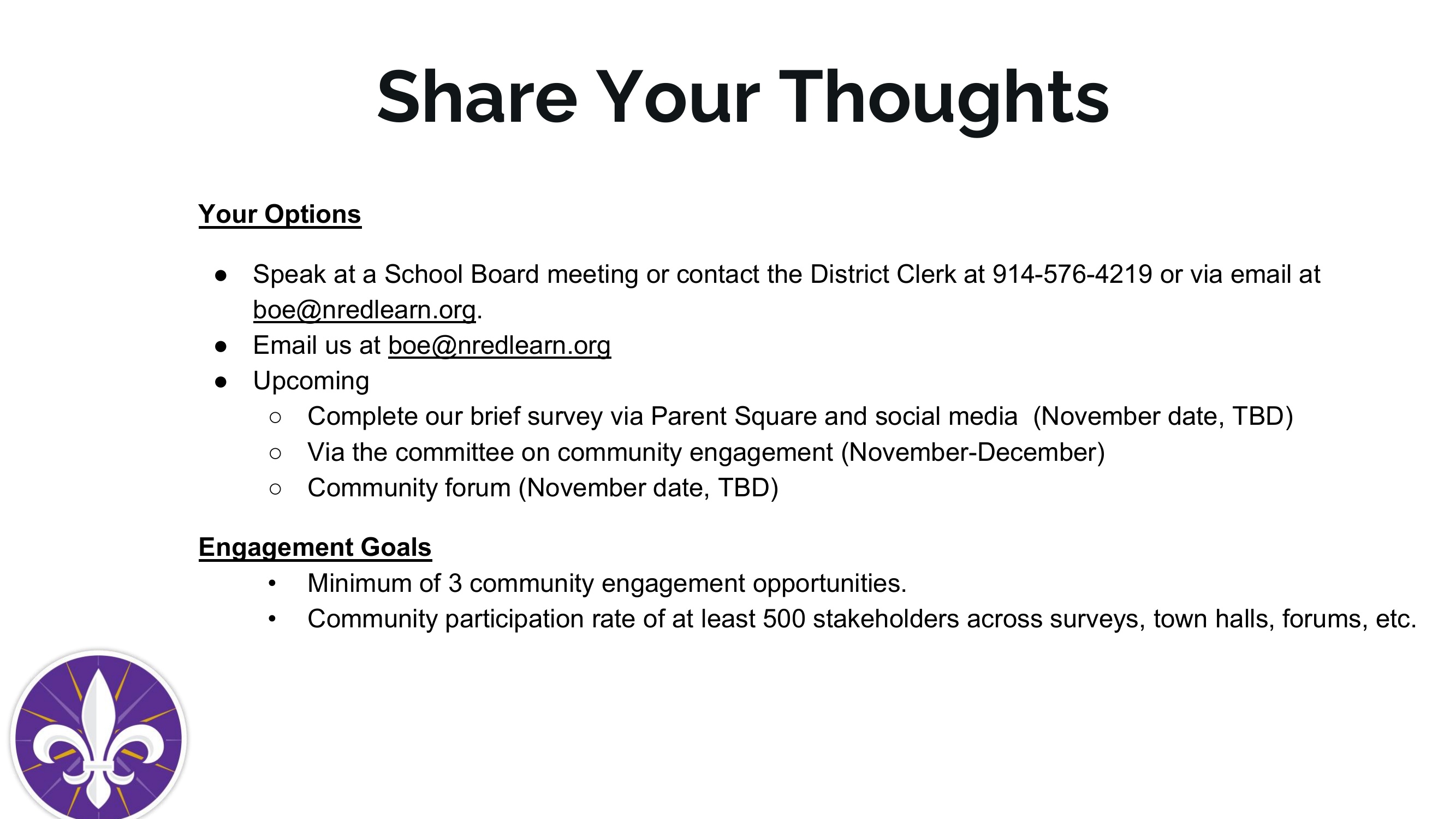
The district’s presentation invites residents to “Share Your Thoughts.” The next several months will provide opportunities for residents to participate as the Board moves toward selecting priorities early next year.
Talk of the Sound will report separately on the Princeton Model, enrollment and demographic projections, magnet schools and advanced-learning programs, the Lincoln Attendance Zone, CTE, OT/PT services, facilities and other issues raised during the Sept. 24 discussion.
Readers with answers to any of the questions above — including district records, studies, presentations, policies or links to relevant public documents — are encouraged to provide them to Talk of the Sound. Readers are also encouraged to submit questions they believe should be added to the Vision 2030 Question Bank. The information will be reviewed as part of the continuing reporting on Vision 2030.
QUESTIONS SUBMITTED TO THE DISTRICT
Following publication of this article, Talk of the Sound submitted the following questions to the City School District of New Rochelle for response:
- Board President Makeda Lewis referenced earlier ideas, discussions and Board retreats that preceded the Sept. 24 Vision 2030 presentation. Were there prior public Board discussions, agenda items, presentations or other materials concerning these ideas that I may have missed? Or was Sept. 24 the first public presentation and discussion of the four Vision 2030 options? If there were earlier public discussions or materials, please provide the dates and links.
- What demographic and enrollment projections for 2030 is the district using to evaluate the Vision 2030 options, and how were those projections incorporated into development of the four ideas?
- What role, if any, did the district’s existing Western Suffolk BOCES demographic, enrollment and long-range planning studies play in developing Vision 2030?
- Was the Planning and Facilities Study that the district said in 2024 it was working with Western Suffolk BOCES to obtain ever completed? If so, when was it completed, was it presented to the Board, and can you provide a copy or link?
- What is the current enrollment and usable capacity of each district school, and what does the district project those figures will be through 2030?
- Under the Princeton Model being considered, what would the projected enrollment be in the proposed fifth- and sixth-grade school and the proposed seventh- and eighth-grade school?
- Are students who live in the Lincoln Attendance Zone currently eligible to participate in the lottery for Barnard, Columbus and Webster? If not, which magnet programs are they ineligible for, and what policy or regulation establishes that restriction?
- What specifically did the district mean during the Vision 2030 presentation and discussion by a state licensing issue involving gifted-and-talented programming? What state statute, regulation, certification requirement or NYSED guidance is the district relying upon?
- How many New Rochelle students are currently enrolled in Career and Technical Education programs through Southern Westchester BOCES, broken down by program? How many students sought CTE placements but could not obtain them for the 2026-27 school year? What is the district’s current annual cost for CTE tuition and transportation?
Talk of the Sound will publish the district’s responses when they are received.
RELATED
New Rochelle Board of Education: Vision 2030
This article was prepared with the assistance of AI tools under the direction and editing of Robert Cox.
Have information about this story? Email robertcox@talkofthesound (preferred) or contact via WhatsApp: +353 089 972 0669.
Discover more from Talk of the Sound
Subscribe to get the latest posts sent to your email.