

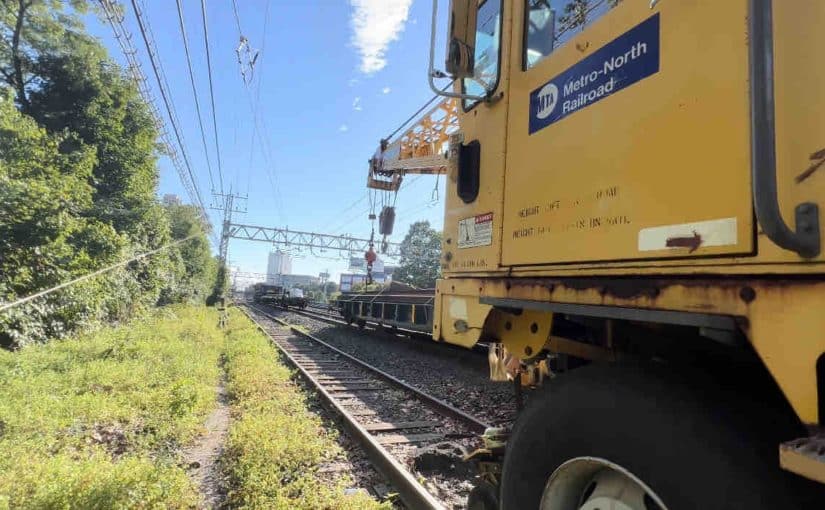
Residents in New Rochelle and Pelham frustrated by Penn Station Access construction have options beyond complaining to local officials. Federal environmental approvals establish commitments involving noise mitigation, community notification and complaint resolution — and federal agencies have authority to examine whether the MTA is honoring them.
NEW ROCHELLE, NY (October 20, 2026) — Complaints about overnight construction noise associated with the Metropolitan Transportation Authority’s Penn Station Access Project have emerged in New Rochelle and Pelham, raising questions about whether the agency is meeting commitments it made to the federal government concerning construction impacts on surrounding neighborhoods.
Residents have complained about nighttime construction, inadequate advance notification and difficulty obtaining information about when disruptive work will end. At least one New Rochelle municipal official has also expressed frustration about construction activity and uncertainty surrounding local oversight.
The complaints raise a question extending well beyond New Rochelle and Pelham: What happens when a major transportation project disrupts neighboring communities, and who has the authority to hold the MTA accountable?
The answer may lie in documents approved five years ago, long before the current complaints arose.
In 2021, the Federal Transit Administration and Federal Railroad Administration approved environmental reviews for Penn Station Access. Those approvals incorporated commitments involving advance notice of disruptive construction, noise and vibration mitigation, community outreach, monitoring and procedures for responding to complaints.
The MTA’s responsibilities are not limited to asking contractors to be considerate of neighboring homeowners. The federal environmental review identifies specific mitigation measures the project is expected to implement.
Residents who believe those measures are not being followed can raise their concerns with federal transportation authorities and seek assistance from their representatives in Congress. Those avenues supplement, rather than replace, complaints to the MTA and local officials.
Talk of the Sound has begun examining whether the MTA is fulfilling its commitments and whether federal officials are monitoring compliance.
New Rochelle Homeowner Reports Weeks of Sleepless Nights
Michael Abbruzzi, a lifelong New Rochelle resident and homeowner of more than 30 years, contacted Talk of the Sound after becoming frustrated with construction activity near his home on Homestead Place.
Abbruzzi said he and his wife had been unable to sleep properly for more than three weeks because of construction associated with the New Rochelle Yard expansion near Joyce Road and the ShopRite supermarket.
In a letter to Mayor Yadira Ramos-Herbert, Abbruzzi described rock hammering and construction vehicle backup alarms between approximately 8 p.m. and 4 a.m. He said neighboring homeowners received no advance notification and were unable to learn how long the disruptive construction would continue.
Abbruzzi contacted the New Rochelle Building Department, which referred him to police. He said police told him there was nothing they could do. He subsequently contacted Buildings Commissioner Paul Vacca, who reached out to the MTA.
The homeowner’s frustration continued into the weekend. On Sunday, October 18, Abbruzzi reported being awakened by construction noise at approximately 6 a.m.
The following morning, Vacca responded to the MTA: “That is really not ok.”
He added that no one should be making noise on Saturday or Sunday mornings and stated:
“To the best of my knowledge there was no noise waiver granted by the City Manager for this project.”
Whether the MTA requires such a waiver, or whether local noise restrictions apply to this particular railroad construction, remains unresolved. Vacca’s comments nevertheless illustrate the difficulties municipal officials can encounter when residents seek relief from construction activities undertaken by a state transportation authority.
Talk of the Sound contacted MTA Deputy Communications Director Aaron Donovan about Abbruzzi’s complaints.
Donovan responded that the MTA had been in regular communication with the homeowner and was attempting to address his concerns.
“The MTA strives to be good neighbors and has been in regular contact with Mr. Abbruzzi to address as many of his concerns as we can,” Donovan said. “We look forward to this phase of construction wrapping up this fall, which should reduce much of the overnight sounds.”
According to Donovan, the MTA moved rock chipping operations from nighttime to daytime hours following complaints from Abbruzzi during the summer. Donovan also said overnight backup alarms were being used to satisfy workplace safety requirements and that the agency was investigating ways to reduce how frequently the alarms sounded.
Those accommodations demonstrate that individual complaints can produce changes. They do not, however, establish whether the MTA provided required advance notification, conducted noise monitoring or fulfilled the other community protections identified in its federal environmental approvals.
Similar Complaints in Pelham Manor
New Rochelle is not the only community affected by construction along the Penn Station Access corridor. In September, residents of Pelham Manor complained about overnight noise associated with construction near an MTA access point on Forest Road. Some residents described sounds resembling a lawn mower as work continued along the railroad tracks.
The Village of Pelham Manor reported receiving information from the MTA indicating that overnight construction access would continue but noise levels were expected to decrease. The village sought additional information concerning construction schedules and advised residents how to contact the project outreach team.
Pelham Manor Residents Express Concerns Over MTA Penn Station Access Project Noise (10/10/2026)
In October 2025, Talk of the Sound reported on planned tree clearing and construction staging along First Street in Pelham, between Monterey Avenue and Corona Avenue. At that time, the Village of Pelham reported working with Metro-North on screening, noise mitigation and eventual replanting. The MTA agreed to install fencing around the construction area, while the village sought compliance with local noise ordinances and a commitment to avoid beginning construction before 8 a.m.
MTA Kicks Off Tree Clearing for Penn Station Rail Expansion in Pelham Neighborhood (10/24/2026)
The New Rochelle and Pelham complaints may be isolated incidents, or they may point to broader problems with how construction impacts are managed along the project corridor.
Determining which is the case requires more than collecting individual complaints. It requires examining the standards established for the project and the records showing whether those standards are being followed.
A Major Railroad Expansion Years in the Making
Penn Station Access is intended to bring Metro-North’s New Haven Line trains directly to Penn Station using Amtrak’s existing Hell Gate Line. The project includes four new accessible Metro-North stations in the Bronx at Hunts Point, Parkchester/Van Nest, Morris Park and Co-op City. It also includes track improvements, bridge rehabilitation, new and upgraded electrical infrastructure, signal modernization and expansion of the New Rochelle Yard.
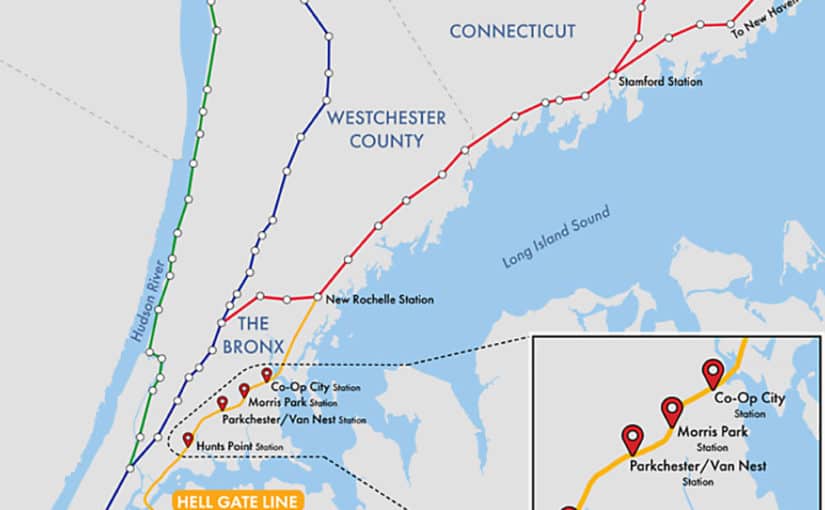
The project is designed to shorten travel times, improve regional connections and provide Metro-North passengers with an alternative to Grand Central Terminal. It is particularly significant for East Bronx neighborhoods that have historically lacked convenient commuter rail access.
When the project broke ground in December 2022, its estimated cost had increased from $2.87 billion to approximately $3.18 billion, partly because of additional infrastructure improvements and the New Rochelle Yard expansion. The announced completion target at that time was 2027.
Talk of the Sound has covered the project for years.
In September 2022, we reported that Metro-North intended to expand the New Rochelle rail yard by adding tracks south of the existing New Haven Line, east of River Street.
The plans affected strips of property adjoining several commercial properties, including the ShopRite parking lot, DeRaffele, Veolia and Sammarco Stone. The expansion was intended to accommodate the additional railroad operations necessary for Penn Station Access.
Metro-North Preps New Rochelle Rail Yard Expansion for Penn Access Project (9/23/2022)
The proximity of the railroad corridor to homes and businesses makes construction impacts a foreseeable concern rather than an unexpected development. That is precisely why major federally reviewed infrastructure projects undergo environmental assessments before construction begins.
The Federal Environmental Review: What Did the MTA Promise?
Under the National Environmental Policy Act, federal agencies must examine the environmental consequences of certain major federal actions before proceeding. For Penn Station Access, the MTA prepared an Environmental Assessment in coordination with the Federal Transit Administration, with the Federal Railroad Administration participating as a cooperating agency. The assessment examined potential consequences for surrounding communities, including construction noise and vibration.
On September 24, 2021, the FTA issued a Finding of No Significant Impact, commonly known as a FONSI. The FRA adopted the assessment and issued its own finding on November 16, 2021. A FONSI means the federal agency determined that a full Environmental Impact Statement was not necessary. It does not mean the project would produce no noise, inconvenience or other adverse effects. Instead, the determination accounted for measures intended to minimize or mitigate identified impacts.
The Penn Station Access environmental documents identify several measures especially relevant to the complaints now emerging in Westchester County:
- Advance community notification: Informing affected neighborhoods and other stakeholders before disruptive construction activities.
- Noise and vibration controls: Implementing measures to reduce construction impacts and monitoring noise and vibration.
- Nighttime construction: Minimizing disruptive nighttime activities where practicable and feasible, recognizing that work along an operating railroad may require restricted construction windows.
- Community outreach: Providing information and updates to residents and other affected parties.
- Complaint resolution: Establishing procedures through which residents can report problems and obtain responses.
The environmental approvals also address implementation of mitigation measures through the project’s contractors. These commitments are significant because they provide a basis for examining the MTA’s actual construction practices against documented expectations established during federal review. They do not establish, by themselves, that any particular complaint proves a violation. Some construction activities may be permitted at night, and certain mitigation requirements involve professional judgments about feasibility. The unresolved issue is whether the MTA is implementing the measures it committed to undertaking.
Primary federal environmental documents:
- FTA Finding of No Significant Impact — September 24, 2021
- FRA Finding of No Significant Impact — November 16, 2021
- Penn Station Access Environmental Assessment — Mitigation, Minimization and Monitoring Requirements, Appendix M
- Federal Railroad Administration — Penn Station Access Environmental Review
These are public documents. Residents can examine the requirements themselves rather than relying solely on statements from the MTA or local officials.
Who Can Hold the MTA Accountable?
When residents encounter disruptive railroad construction, their first instinct may be to call the police, contact their mayor or complain directly to the MTA. Those are reasonable first steps, particularly when immediate assistance is needed. But local government authority over construction on railroad property can be limited, and the MTA’s own complaint process is not necessarily the only avenue available. The federal government has a separate interest in ensuring that federally reviewed and funded projects satisfy applicable environmental requirements. The FTA issued the original Penn Station Access environmental finding, while the FRA subsequently adopted that review in connection with its role administering federal railroad funding.
Those agencies can examine whether mitigation measures incorporated into federal approvals are being implemented. Depending on the applicable funding agreements and the circumstances of any established noncompliance, federal authorities may have mechanisms to require corrective action or impose grant-related consequences. That does not mean every noise complaint can result in withheld funding, a penalty or a construction shutdown. The availability of particular enforcement measures depends on the legal obligations involved and findings made by the responsible agencies. But it does mean that a resident’s options need not end when a municipal official says there is nothing the city can do.
The Federal Railroad Administration and Federal Transit Administration
Residents can bring concerns about the project’s environmental commitments to the federal agencies involved in its approval. The FRA identifies an environmental contact for Penn Station Access on its project review page. Residents seeking federal review should identify the construction location, describe the disturbance, provide relevant dates and times, explain what happened when they contacted the MTA, and identify any mitigation commitments they believe have not been followed.
Questions about environmental compliance can be directed to the FRA Environmental Office at FRAEnvironment@dot.gov.
They can ask the agency to determine whether the complaint concerns an applicable federal environmental requirement and, if so, whether a compliance review is warranted. Talk of the Sound has requested clarification from the FRA and FTA concerning the precise procedure for submitting such complaints, the agencies’ respective oversight responsibilities and the remedies potentially available.
Congress: Schumer, Gillibrand and Latimer
Residents also have an avenue through their elected representatives in Congress. New York’s two U.S. senators, Chuck Schumer and Kirsten Gillibrand, represent residents throughout the state. Rep. George Latimer represents New Rochelle and Pelham in the 16th Congressional District. Congressional offices can contact federal agencies on behalf of constituents, request explanations concerning agency oversight, seek information about potential noncompliance and press for appropriate reviews. Members of Congress can also pursue broader oversight through letters, committee inquiries and, where warranted, hearings. They cannot simply declare that the MTA violated its environmental approvals or independently impose federal penalties. But they can ask federal agencies to account for how they are administering their responsibilities.
Residents seeking congressional assistance may contact:
Governor Kathy Hochul and State Oversight
The MTA is a New York State public benefit corporation. Governor Kathy Hochul exercises substantial influence through the appointment of MTA leadership, subject to applicable confirmation requirements. That makes the governor’s office another potential avenue for residents who believe the authority is failing to address construction impacts appropriately. The governor does not serve as the federal agency enforcing the environmental findings. Her administration can nevertheless seek information from MTA leadership and press for appropriate corrective measures within the state’s governance structure.
Residents can contact the Governor’s Office to raise concerns about the MTA’s construction practices and its handling of community complaints.
How to File a Construction Complaint
Residents affected by Penn Station Access construction should begin by documenting the problem as precisely as possible. Useful information includes the location of the construction, dates and times of disruptive activity, descriptions of noise or vibration, photographs or recordings taken from lawful locations, and any correspondence with the MTA or local officials.
The MTA maintains a Penn Station Access community outreach operation.
Penn Station Access Community Outreach
Email: PSAOutreach@mtacd.org
Telephone: 347-263-7837
Project website: https://www.mta.info/project/penn-station-access
The telephone number has been identified in project outreach materials as a 24-hour hotline.
Residents should request confirmation that their complaint has been received, ask for an explanation of the work being performed, seek an estimated schedule for disruptive activities and request information about available mitigation measures. They should retain copies of their communications and responses. If the problem continues or the response is inadequate, residents can provide that documentation to the federal agencies and their congressional representatives, specifically requesting examination of the environmental commitments relevant to their complaint.
A complaint alone does not establish that the MTA has violated federal requirements. But a documented series of complaints, together with evidence concerning notice, monitoring and corrective action, can provide a basis for meaningful oversight.
Talk of the Sound Files FOIL, Seeks Federal and Congressional Answers
On October 20, 2026, Talk of the Sound submitted a Freedom of Information Law request to the MTA seeking records that may establish how the authority is handling construction impacts throughout the Penn Station Access corridor.
The request, assigned reference number R018036-102026, seeks five categories of records:
- Construction noise, vibration and resident complaint logs throughout the project corridor, including records of responses and corrective action.
- Community notifications distributed to residents, businesses and local officials in New Rochelle and Pelham.
- Noise and vibration monitoring reports, particularly concerning New Rochelle Yard and construction in Pelham.
- Written procedures governing community outreach, nighttime construction, noise mitigation and complaint resolution.
- Records concerning implementation of environmental mitigation commitments and communications with the FRA and FTA.
The request generally covers records beginning January 1, 2025.
Separate media inquiries have been submitted to MTA Deputy Communications Director Aaron Donovan, the Federal Railroad Administration and Federal Transit Administration.
Talk of the Sound has asked the MTA how it documents compliance with federal environmental commitments, how construction notifications are distributed, how complaints are tracked and what restrictions apply to nighttime and weekend work. The federal agencies have been asked who monitors compliance, whether complaints have been received, whether potential deficiencies have been identified and what enforcement mechanisms are available.
Media inquiries have also been sent to Sens. Schumer and Gillibrand, Rep. Latimer and Governor Hochul’s press office. The congressional offices were asked whether they have received constituent complaints, whether they have previously intervened with the MTA or federal agencies, whether they would consider requesting a federal compliance review, and how residents can obtain their assistance. Hochul’s office was asked whether the administration is aware of the complaints, whether it has reviewed the MTA’s implementation of environmental commitments and what state-level oversight or assistance may be available.
These inquiries are separate from the MTA’s formal FOIL process.
As of publication, the inquiries are pending. Talk of the Sound will report substantive responses and update readers as records become available.
The Bigger Question: Who Is Checking?
Penn Station Access promises significant transportation benefits to the Bronx, Westchester County, Connecticut and the broader metropolitan region. A major railroad expansion of this kind inevitably involves construction disruption, particularly where tracks run close to established residential neighborhoods. The existence of noise complaints does not, by itself, establish misconduct or noncompliance. Nor does the federal environmental review prohibit every disruptive construction activity. But the environmental approval process is intended to identify foreseeable impacts and establish measures for addressing them.
The questions now are whether affected communities are receiving the notice they were promised, whether noise and vibration are being monitored, whether complaints produce documented responses, and whether anyone outside the MTA is examining the authority’s compliance.
Michael Abbruzzi’s experience in New Rochelle and the complaints in Pelham may ultimately prove to be isolated problems addressed through ordinary construction management. They may also reveal shortcomings affecting other neighborhoods along the corridor.
That determination will depend on records, explanations and independent oversight.
Talk of the Sound intends to follow the evidence and publish additional articles as the investigation develops.
RELATED
- Pelham Manor Residents Express Concerns Over MTA Penn Station Access Project Noise — October 10, 2026
- MTA Kicks Off Tree Clearing for Penn Station Rail Expansion in Pelham Neighborhood — October 24, 2026
- Metro-North Preps New Rochelle Rail Yard Expansion for Penn Access Project — September 23, 2022
- MTA Announces Completion of Environmental Review for Penn Station Access — October 3, 2021
- MTA to Award $2.87 Billion Contract for Metro-North Penn Station Access Project — December 18, 2021