
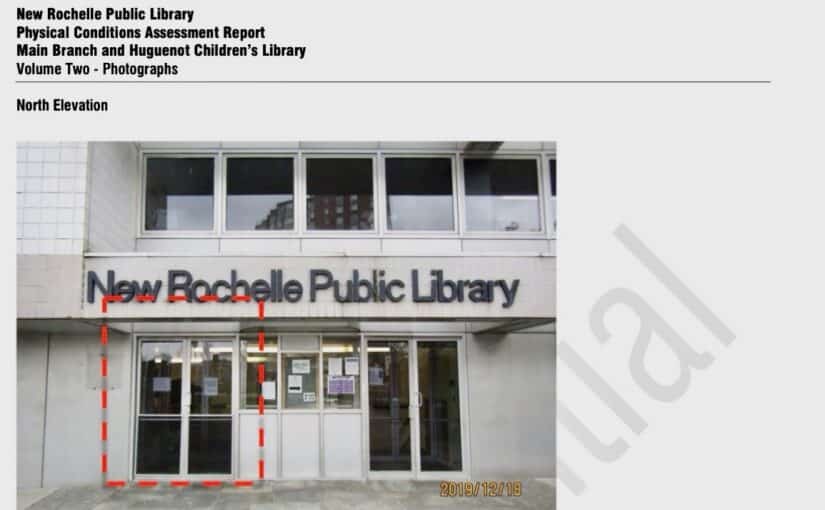
On May 19, 2026, New Rochelle voters will decide whether to approve a $55 million capital improvement bond for the New Rochelle Public Library — the largest single bond the library has ever asked the public to support.
This is not a simple repair project. It goes well beyond the critical deficiencies identified in the library’s own 2020 Physical Conditions Assessment. Because the first of two public information sessions with Q&A is tomorrow we scrambled to complete this analysis today.
Community information sessions are being held on Thursday, April 16, 7pm and Tuesday, April 28, 7 pm, offering space to learn more, ask questions, and stay informed.
Talk of the Sound is publishing this complete 8-part voter guide today so every voter has the full facts before the meeting.
We have reviewed the entire 2020 APS Conditions Assessment (Volume One – Technical Report, Volume Two – Existing Conditions Photographs), the January 2026 Calgi Construction cost estimates, the Director’s letter, the tax-impact tables, the 2003 governance transition, and the library’s 2021-2026 Strategic Plan.
Table of Contents
Part 1: The Two Libraries and How We Got Here
Part 2: What the 2020 Report Actually Found
Part 3: The Library’s Own 2021-2026 Strategic Plan – The Vision Behind the $55 Million Bond
Part 4: What Changed (or Didn’t) Between 2020 and 2026
Part 5: The Three Options on the Table in 2026
Part 6: Why the Price Tag Jumped from ~$15 Million to $55 Million
Part 7: The Oversight Failures That Made This Necessary
Part 8: Questions to Ask at Tomorrow’s Public Information Session
Part 1: The Two Libraries and How We Got Here
The New Rochelle Public Library operates two facilities with very different histories and physical needs.
The Huguenot Children’s Library (794 North Avenue) dates to 1869, when it was built as a private residence for the Mahistedt family, who harvested ice from the adjacent lakes. In 1922 the family sold 40 acres to the city for what became New Rochelle High School and Huguenot Park. The house was donated to the city and became the Huguenot Children’s Library. The two-story brick structure in the Second Empire style with a slate-mansard roof underwent a significant renovation in the mid-1990s. Today it serves children from kindergarten through sixth grade and includes a program room, reading areas, stacks, computers, and support spaces.
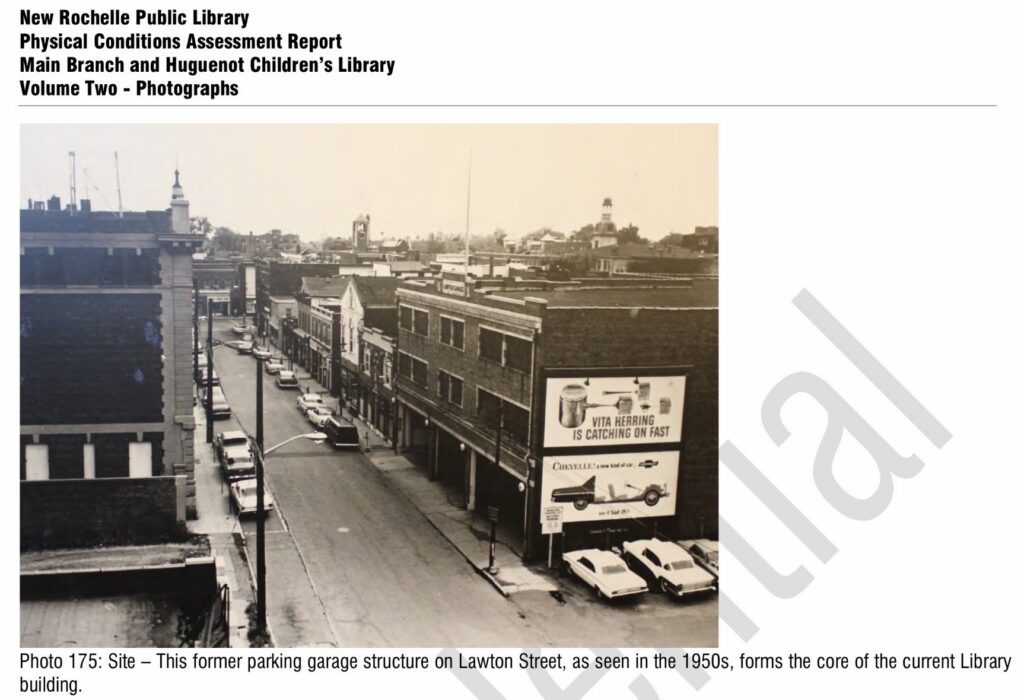
The Main Branch (One Library Plaza) is a modern facility that opened on September 19, 1979, to critical acclaim. Designed by Pomeroy, Lebduska Associates of New York City and Fred W. Lyon Associated Architects of New Rochelle, the three-story, approximately 60,000-square-foot building (with a partial basement) incorporated part of a former parking garage. The resulting low ceiling heights were offset by a wide, central skylit atrium. The Main Branch houses the main collections, the 148-seat Ozzie Davis Theater, gallery space, circulation and reference areas, stacks, a children’s area, classrooms, computer centers, history rooms, a bookstore run by Friends of the NRPL, offices, and support spaces for library staff.
In the fall of 2019 the library board and administration decided it was time to get a professional handle on the physical condition of both buildings. They retained Architectural Preservation Studio (APS) to conduct a full Physical Conditions Assessment. A project kick-off meeting was held on November 13, 2019. After multiple site visits in December 2019 and January 2020, APS issued Volume One – Technical Report on February 28, 2020, along with a separate Volume Two of photographs.
Barely two weeks later, New Rochelle became the first major COVID-19 epicenter in the United States. On March 10, 2020, Governor Cuomo declared a “containment area” around the city and deployed the National Guard. The library, like every other public building, was forced into a long shutdown and had to pivot to remote services. All capital-planning work that had been moving forward in 2019 essentially went on hiatus.
When facilities planning finally resumed several years later, the world had changed. Construction costs had risen sharply because of pandemic-era inflation, supply-chain disruptions, and labor shortages. The original 2020 estimate for basic repairs and deferred maintenance was no longer realistic.
In January 2026 the library’s consultants (Calgi Construction) presented three updated options based on the 2020 conditions report:
- Option A: Infrastructure-only renovation → $34.5 million
- Option B: Full Building Renovation (the option chosen for the ballot) → $55 million
- Option C: Individual project-by-project approach → $67.8 million
The library board selected Option B — the $55 million Building Renovation Project — which includes fixing the documented 2020 deficiencies plus extensive interior modernization and program improvements.
Part 2: What the 2020 Report Actually Found
The February 28, 2020 APS report described both buildings as being in “fair” condition overall but highlighted several critical and serious deficiencies that “should be prioritized moving forward.” In the Executive Summary the consultants wrote:
“This Physical Conditions Assessment has revealed the following major deficiencies, which should be prioritized moving forward…”
They then listed the highest-priority items:
- Significant handicapped accessibility issues at the Main Branch in both public and staff areas, including inaccessible staff restrooms, offices, and classrooms.
- Assuming full occupancy based on the calculated occupant load, there are inadequate toilet fixture counts for the general public at the Main Branch.
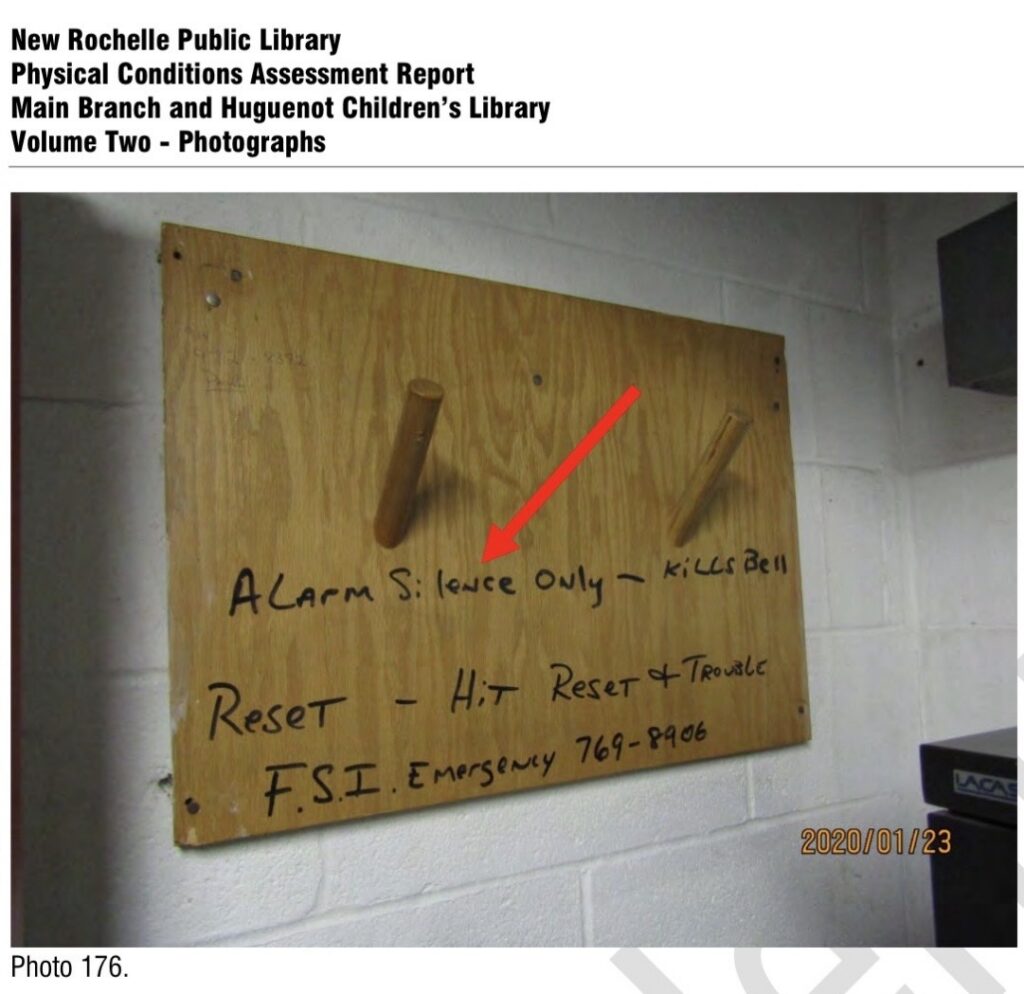
- Correction of life-safety issues at the Main Branch and Huguenot Children’s Library (these were immediately brought to the attention of the NRPL for corrective action — see Appendix 6.3).
- Several systems at the Main Branch, including the air handlers and electrical switchgear, are from the original construction and require replacement as they have reached the end of their service life after 40 years.
- The completion of the sprinkler cross and branch piping on the second and third floors.
- Dysfunctional vertical circulation at the Huguenot Children’s Library.
The report used a formal rating system (Good / Fair / Poor, plus Minor / Serious / Critical) based on threat to safety, health, code compliance, and long-term building integrity. Many items were flagged at the Serious or Critical level.
The full Deficiency List organizes findings into seven categories for each building. While the report does not give a single grand total, it documents dozens of specific deficiencies:
| Category | Main Branch (approx. number noted) | Huguenot Children’s Library (approx. number noted) | Severity Highlights |
| Site Conditions | 15–20 | 5–8 | Tripping hazards, code issues |
| Exterior Envelope | Dozens (most extensive section) | 10–15 | Leaks, sealants, flashing, parapets |
| Interior Finishes | Numerous | Several | Wear-and-tear |
| Mechanical (HVAC) | Significant | Limited | End-of-life equipment |
| Electrical | Significant | Moderate | End-of-life switchgear |
| Plumbing | Various | Various | Fixture and piping issues |
| Fire Protection | Significant | Some | Incomplete sprinklers |
Part 3: The Library’s 2021-2026 Strategic Plan – The Vision Behind the $55 Million Bond
In 2021 the library board and administration adopted a formal 2021-2026 Strategic Plan titled “Writing Our Next Chapter.” The plan states that “more than 1,200 New Rochelle residents shared their ideas about the future of the Library” through a combination of a public survey, a Board working session, a focus group with Library staff, and two community meetings. The plan does not break down the number of participants by method of input or provide detailed summaries or attendance figures for the in-person sessions.
The Strategic Plan is explicit about the need for major facility upgrades. In the “Look At What We Accomplished Together” section it states:
“The Library facility has served our city since 1979, and the building’s 43-year-old infrastructure is showing its age, despite ongoing improvements. Our building, as outlined in our recent building audit conducted in 2020, requires major, and in some cases, urgent renovations and repairs. The idea is not only to repair and fix, but to modernize and equip the Library with new and improved amenities that meet the needs of patrons, now and well into the future. Substantial investment is required to modernize the building’s infrastructure and to bring the building into the twenty-first century.”
Goal 1 of the plan is titled “Enhance the Library’s facility so that it is best-in-class and built for the future.” Its five objectives are:
- Provide accessible spaces, entrances, and circulation elements for all.
- Ensure the Library’s buildings and surrounding spaces are welcoming, comfortable, clean, safe, and well-lit.
- Invest in capital improvements that modernize the Library’s infrastructure and enhance the experience of patrons through contemporary technologies and new amenities, such as recording studios and outdoor patios.
- Incorporate green building solutions to enhance the sustainability of the Library and reduce its carbon footprint and energy consumption.
- Make it easier to visit the Library by addressing nearby parking issues.
The plan’s Action Plan (short-term 2022–2024 and long-term 2024–2025) calls for the development of a full Capital Improvement Plan (CIP) that will identify and define the capital projects needed to modernize the library, provide new amenities, incorporate green building solutions, and make the building accessible and compliant with the Department of Buildings. It explicitly references the 2020 building audit as the foundation for these improvements.
The Strategic Plan also lays out four additional goals that explain the broader program enhancements in the $55 million proposal:
- Goal 2: Upgrade technology to elevate the Library’s programming and service delivery.
- Goal 3: Strengthen existing and establish new trusted lines of communication with residents across New Rochelle.
- Goal 4: Prioritize outreach to communities of color, Spanish-speaking residents, and underserved neighborhoods.
- Goal 5: Increase the visibility, access, and scale of the Library’s programs and services that encourage patronage among youth and young working professionals, ages 16-35, and residents of Downtown New Rochelle.
The plan repeatedly emphasizes that the library should be “a best-in-class library that provides a place for all residents to access resources that meet their diverse needs and gather in community.” It positions the facility upgrades as essential to achieving that vision.
In short, the 2021-2026 Strategic Plan is the library’s own official roadmap for the next five years. The $55 million bond is the funding mechanism to carry out Goal 1 and support the other four goals. The plan makes clear that the library is not just asking to “fix what is broken” — it is asking to build the facility it believes the community needs for the next several decades.
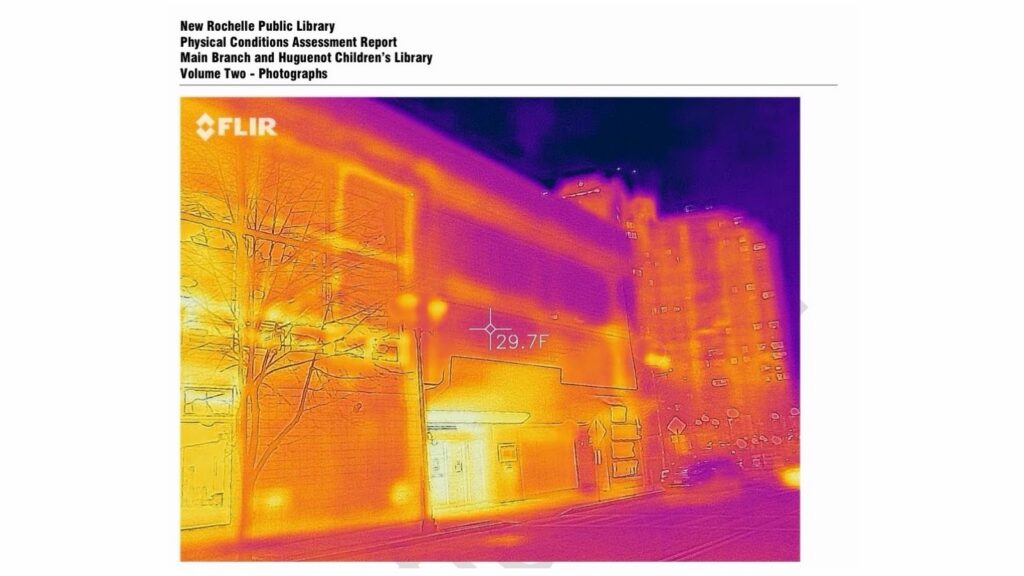
Part 4: What Changed (or Didn’t) Between 2020 and 2026, a Gap Analysis of which 2020 Problems were Fixed and which are Still in the $55 Million Plan
A central question for voters is this: Between February 2020 and the January 2026 cost estimates, which of the critical and life-safety deficiencies were actually addressed and fixed, and which ones remain outstanding and are now incorporated into the $55 million bond request?
Here is the accounting:
| 2020 Critical/Serious Deficiency | Still Appears Needed in 2026? | Included in $55M Building Renovation? | Notes |
| Major ADA accessibility barriers | Yes | Yes | Explicitly listed |
| Inadequate public toilet fixture counts | Yes | Yes | Addressed in plumbing renovation |
| Life-safety issues (immediately reported) | Partially addressed? | Yes | Full sprinkler completion included; exact status of other items unknown |
| End-of-life air handlers & HVAC systems | Yes | Yes | Full replacement + new ducts |
| End-of-life electrical switchgear & main panels | Yes | Yes | Full replacement + new distribution |
| Incomplete fire-sprinkler coverage (2nd & 3rd floors) | Yes | Yes | Complete new layout |
| Aging roof, failing sealants, skylights | Yes | Yes | Full PVC roof + skylight replacement |
| Leaking/failing windows & curtain walls | Yes | Yes | Complete replacement |
| Exterior envelope / precast panel issues | Yes | Yes | Insulated metal panel cladding |
Almost every critical deficiency is still present in the 2026 scope. The $55 million proposal therefore includes a very large share of legitimate catch-up repair work that was deferred during the COVID years.
However, the 2026 proposal also funds substantial new work that was never identified as a deficiency in 2020: complete renovation of Children’s, Teen, and Adult spaces; new study rooms, meeting areas, and flexible program spaces; updated furniture, fixtures, equipment, and interior signage; allowance for a new elevator.
These program enhancements are a reason the chosen option jumped from a 2020-era repair budget of ~$15 million to $55 million today.
They are not the only reason.
The 2020 report is only hard costs: $15 mm in hard costs might mean $3-5 mm in soft costs so a bond in 2020 might have been $18-20 mm. The final $55 million bond amount includes both hard costs (actual physical construction, labor, and materials) and soft costs — architectural and engineering design fees, legal expenses, permitting, project management, and bond issuance costs. Soft costs routinely add 15% to 30% or more on top of the construction estimate and contingency. This is standard practice in every municipal and school-district bond referendum.

Part 5: The Three Options on the Table in 2026
The library ultimately chose the middle “Building Renovation” option for the May 19, 2026 referendum.
| Category | Infrastructure Renovation ($34.5M) | Building Renovation (Chosen – $55M) | Individual Projects ($67.8M) |
| Total Project Cost | $34,515,332 | $55,016,610 | $67,804,783 |
| Cost per Square Foot | $477 | $761 | $937 |
| Hard Construction Costs | $19.7 million | $30.2 million | $33.7 million |
| Scope – Core Infrastructure | Full roof, HVAC, electrical, sprinklers, envelope, accessibility | Same + extensive interior work | Same full scope |
| Scope – Program / Interior Upgrades | Limited | Extensive (new Children’s/Teen/Adult spaces, study rooms, flexible areas) | Same extensive upgrades |
| Project Delivery | Phased, coordinated | Phased, same prime contractors | Separate contracts per piece |
| Expected Disruption | Moderate | Moderate to high | Highest |
The $55 million Building Renovation option is not the cheapest way to fix the 2020 problems — it deliberately adds major interior modernization and program improvements that were never listed as deficiencies in 2020.
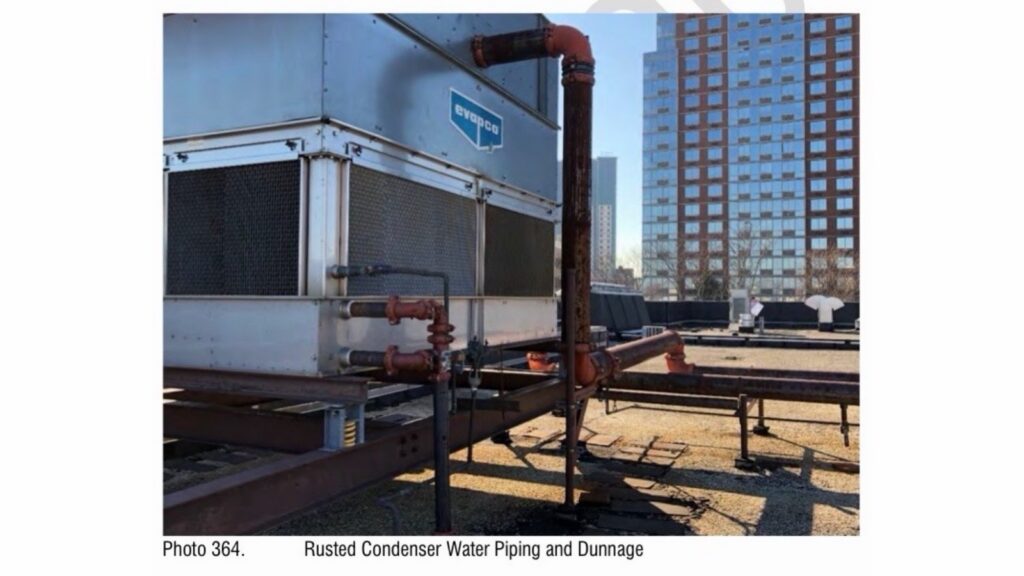
Part 6: Why the Price Tag Jumped from ~$15 Million to $55 Million
The 2020 report estimated $15.1 million (2020 dollars with 20% contingency without soft costs) to address documented deficiencies. Six years later the chosen option is $55 million — more than 3.6 times higher (but factoring in soft costs about 3.0 times higher).
A large share of the $55 million addresses the exact critical items flagged in 2020 (roof replacement, HVAC, electrical switchgear, fire-sprinkler completion, windows/curtain walls, accessibility, life-safety). However, roughly 30–40% of the funds would go to new program enhancements (renovated Children’s/Teen/Adult spaces, study rooms, flexible areas, new furniture and signage, elevator allowance) that were not listed as deficiencies in 2020.
The library’s decision to select the middle “Building Renovation” option (instead of the cheaper $34.5 million Infrastructure-only path) means voters are being asked to approve both the necessary repairs and a significant upgrade to how the library serves children, teens, and adults.
Part 7: The Oversight Failures That Made This Necessary
The 2020 report itself flagged a significant institutional gap. Because the library is a New York State school-district library, it is required to undergo yearly fire-safety inspections and file annual occupancy certificates with the NYSED.

The consultants wrote:
“The City School District of New Rochelle does this on a yearly basis for all their facilities. We believe that this critical yearly safety inspection has inadvertently fallen through the cracks when the Library transitioned from a municipal library to a school-district library in 2003.”
The reported notes that for 17 years the library appears to have operated without the routine, mandatory oversight that every school building in the district receives. The report found many significant fire safety violations.
The gap extended beyond annual inspections. In May 2016, City School District of New Rochelle voters approved a $106.5 million capital bond to fund complete infrastructure repairs across its 10 school buildings. The District-Wide Health and Safety Committee (also known as the facilities committee) oversaw that entire process.
The library was never once discussed or included in that $106.5 million bond planning, even though it had been a school-district library since 2003. As co-chair of that committee until June 2022, I can state this directly: we reviewed conditions for the schools, but the library’s facilities were never brought to the table.
In retrospect, the library should have been part of the district’s regular inspection regime and five-year building condition surveys. Had it been, its documented needs would almost certainly have been addressed as part of the $106.5 million bond that was already funding major infrastructure work across the district.
This is simply the factual record. The library’s own 2020 report flagged the exact same oversight problem.

Part 8: Questions Worth Asking at the Public Information Sessions
- Which specific critical deficiencies identified in the February 2020 APS report have already been fixed since 2020?
- How much of the $55 million is strictly for the 2020 life-safety, mechanical, electrical, roof, and envelope repairs versus new program space?
- Why was the more expensive “Building Renovation” option chosen instead of the $34.5 million Infrastructure-only option that would have addressed the documented 2020 problems?
- What communication with the school district took place after the 2020 report noted that NRPL was a “school district public library” so the district should have been performing the annual fire inspections as well as the Building Conditions Surveys and filing them with NYSED?
- Since 2003, when were Building Condition Survey Instruments (BCSI) completed both library buildings? Were they filed with NYSED? Can you provide each BCSI?
- The 2020 report says there no fire inspections between 2003 and 2020. Has the library been receiving the required annual NYSED fire-safety inspections every year since 2020? When was the last fire inspection? Who performed the inspection? Can you post a copy on the website.
- What would the tax impact have been if voters had been asked to approve only the $34.5 million infrastructure package?
- How much of the additional $20.5 million (difference between $34.5M and $55M) is for interior cosmetic or program enhancements that were not deficiencies in 2020?
- Will any of the 2020 critical items be removed from the final scope if the bond passes?
- What is the current condition of the Main Branch’s roof, HVAC, electrical switchgear, and fire-sprinkler system today?
- If the bond fails, what is the library’s contingency plan for the critical life-safety and infrastructure items that were already flagged as urgent six years ago?
- How was the public survey for the 2021-2026 Strategic Plan conducted? Was it distributed primarily online (for example, via a tool like SurveyMonkey), by email, on paper, or through multiple channels?
- How many surveys were sent out or made available to residents?
- Of the more than 1,200 responses claimed, how many total survey responses were received and how many were completed 100%?
- Will the library make the full survey questions and a detailed report or breakdown of the responses publicly available?
- Was the $15 mm in the 2020 report only hard costs?
- If the bond referendum fails can it be brought back for another vote, when and can it be either Option A ($35 mm) or Option B ($55 mm)?
- The 2020 report notes that the library had already completed several major improvements at the Main Branch in the prior 10 years, including a new boiler, new cooling tower, partial sprinkler system, new entrances, circulation desk, theater seating, and elevator upgrades. Are these items still in good repair and within their useful life? Which, if any, are still included in the $55 million bond?
This article was prepared with the assistance of AI tools under the direction and editing of Robert Cox.
If we missed something or you think of a good question to add to the list contact us. Email robertcox@talkofthesound.com (preferred) or contact via WhatsApp: +353 089 972 0669.