

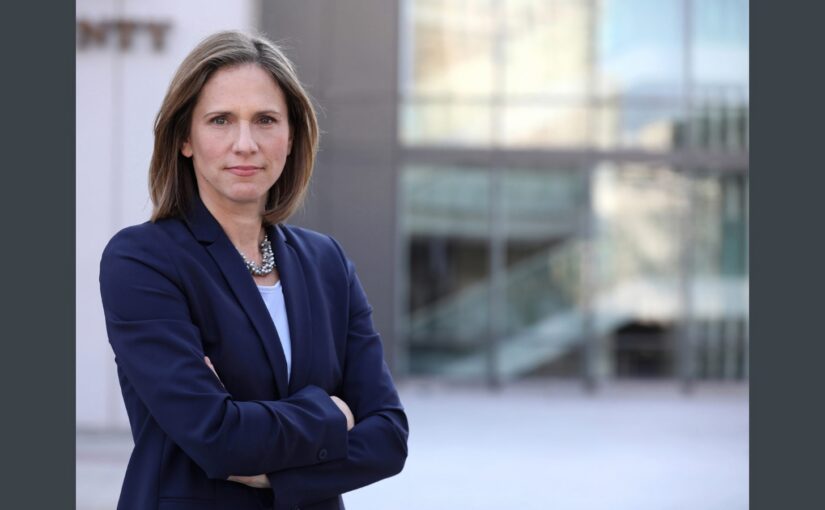
NEW ROCHELLE, NY (May 21, 2026) — In 2020, Miriam Rocah ran for Westchester County District Attorney on a promise of transparency. Among her most specific commitments: publicly releasing an adverse credibility list — commonly known as a bad cop list, Brady list, or Giglio list — identifying law enforcement officers whose documented conduct makes them unreliable as witnesses.
“Most DAs maintain an Adverse Credibility list, commonly called the ‘Bad Cop List,’” her campaign materials stated. “The public has a right to know who these individuals are.”
She won. She served four years. She never released the list.
That failure has consequences that extend well beyond a broken campaign promise. Three officers whose conduct has been extensively documented by Talk of the Sound — Lieutenant Sean Kane, Officer Alec McKenna, and Detective Michael Vaccaro — each present strong cases for placement on such a list. Whether any of them were ever placed on it, whether prosecutors were required to disclose their conduct to defense attorneys in prior cases, and what happened to the cases those officers built over years of NRPD service are questions that have never been publicly answered.
Talk of the Sound has been pursuing those answers for four years.
The Promise and the Pursuit
On July 28, 2022 — eighteen months into Rocah’s tenure — Talk of the Sound emailed the DA’s office asking for the adverse credibility list. A DA spokesperson, replied the following day that she would follow up. She acknowledged in August 2022 that the list was “in the works” and that there had been no “change of mind.” She asked Talk of the Sound to hold publication of a story while discussions continued. A September phone call established a follow-up date of September 30. That date passed with no response. Talk of the Sound notified the DA’s office it intended to publish. Still nothing. By December 2022, the same DA spokesperson was writing that she had been “thinking to myself just last night how I should call you about this.” The list never came.
Rocah announced in October 2023 that she would not seek re-election. She left office December 31, 2024. The list was never released during her tenure.
Susan Cacace was sworn in as Westchester County District Attorney on January 27, 2025. Talk of the Sound has asked Cacace directly whether the list exists, whether it was ever completed, and whether Kane, McKenna, and Vaccaro are on it. Talk of the Sound has also submitted a FOIL request for all versions of the adverse credibility list from the earliest available version to the present, including any lists maintained by former DAs Janet DiFiore, Anthony Scarpino, Miriam Rocah, and current DA Susan Cacace. No response has been received as of publication.
Sean Kane: The Admission
The case for Kane’s placement on an adverse credibility list begins with a 2013 incident that predates his involvement in the Harper matter by eleven years. During a traffic stop, Kane found a gravity knife and then discarded it — failing to log it as evidence. He received a letter of reprimand. The conduct — discarding physical evidence and failing to log it — is precisely the kind of prior dishonesty that triggers Brady/Giglio obligations.
Under Giglio v. United States, prosecutors are required to disclose prior acts of dishonesty to defense attorneys in any case where the officer is a material witness, an arresting officer, or an affiant for a warrant. If Kane was never placed on the DA’s adverse credibility list after 2013 — and there is no public evidence he was — then every case he touched from 2013 forward may have been affected by a failure to disclose.
The Harper matter adds a second documented act. NRPD’s own disciplinary records — obtained by Talk of the Sound under FOIL — state that Kane admitted he did not see Harper discard drugs and that an informant either supplied the drugs or identified their location. That admission, reported by Talk of the Sound for the first time, falls squarely within Rocah’s own campaign definition of officers appropriate for an adverse credibility list: those who “falsified data, gave false information under oath, or otherwise compromised their own integrity.”
Kane joined NRPD in 2006. By 2024 he was heading the Special Investigations Unit. Roughly 18 years of cases as detective, detective sergeant, lieutenant, and unit commander. Every one of those roles creates potential Brady/Giglio exposure for every case he touched.
The Grand Jury Question
Talk of the Sound published Kane’s disciplinary history before Rocah’s office presented the case to a grand jury in December 2024. If Talk of the Sound could obtain those records under FOIL, so could the DA’s office. The grand jury returned a no-bill. Whether Kane’s documented disciplinary history — including his 2013 evidence violation — was presented to the grand jury is unknown. Rocah’s final statement on the Kane matter, issued eighteen days before she left office, thanked NRPD for its cooperation and said nothing about Brady, Giglio, or any review of prior Kane cases.
Alec McKenna: Disabling the Camera
McKenna shot and killed Kamal Flowers on June 5, 2020. His disciplinary records — obtained by Talk of the Sound after a nine-month FOIL battle, making them the first police disciplinary records ever made public in New Rochelle — revealed 158 violations in a single 62-day investigation period and a documented pattern of disabling in-car recording equipment during traffic stops.
Deliberately disabling a recording device during a traffic stop — when that device exists specifically to create an objective record of the encounter — is functionally equivalent to destroying or suppressing evidence. A defense attorney whose client was stopped by McKenna, charged based on McKenna’s account, and whose case produced no camera footage would want to know that McKenna had a documented history of disabling cameras during traffic stops. That information is material to the defense. Under Brady, material information must be disclosed.
The Grand Jury Question
The Westchester County grand jury that returned a no-bill on McKenna in November 2020 was presented the case by DA Anthony Scarpino’s office. What that grand jury heard was substantially the same false narrative Commissioner Schaller and Mayor Bramson had presented publicly on June 6, 2020 — a narrative that police records prove was fabricated. Whether the grand jury heard about McKenna’s documented pattern of disabling cameras during traffic stops, his 158 violations in a single investigation period, or his January 2020 use of force incident — a legally dubious stop of a Black couple of similar age to Flowers initiated at approximately the same location where Jerrel Garris was later killed, resulting in McKenna drawing his weapon just five months before the Flowers shooting — is unknown. Talk of the Sound has asked. No answer has come.
Whether McKenna was ever placed on the Westchester County DA’s adverse credibility list is unknown. Talk of the Sound has asked DA Cacace directly.
Someone in NRPD command placed McKenna in an unmarked vehicle with no camera — eliminating the very oversight mechanism that had exposed his prior conduct — and assigned him to exactly the situation where his pattern of behavior was most relevant and least documented. That decision was never publicly examined. There was no civilian oversight body to examine it. The demand for a CCRB grew directly from the community’s response to what happened on June 5, 2020.
Michael Vaccaro: False Statements
Vaccaro was suspended and charged with Attempted Assault in the Third Degree after a February 2021 violent attack on Malik Fogg, a Black man. PBA President Christopher Greco issued a public statement on Vaccaro’s behalf making claims that were contradicted point by point by CCTV footage, cell phone video, and Vaccaro’s own recorded statement to NRPD. Vaccaro was acquitted at trial.
Talk of the Sound published Vaccaro’s disciplinary history — 17 violations at the time, including a prior 10-day suspension for making false statements — before his criminal trial. That information was public and available to both prosecution and defense. His disciplinary hearing ultimately produced his 18th sustained disciplinary charge — the most in NRPD history. He was eventually separated from the department.
A 10-day suspension for making false statements is among the clearest possible triggers for Brady/Giglio obligations. A defense attorney whose client was charged in a case where Vaccaro was a material witness would want to know that Vaccaro had been formally disciplined for making false statements. Whether that information was ever disclosed — in any case, to any defense attorney — is unknown. Whether Vaccaro was ever placed on the Westchester County DA’s adverse credibility list is unknown. Talk of the Sound has asked DA Cacace directly.
The Deeper Question: Who Tells the DA?
There is no automatic disclosure requirement in New York mandating that police departments share officer disciplinary records with prosecutors. The DA’s office is expected to maintain its own Brady/Giglio list based on information it receives — but that depends in practice on either the police department proactively sharing disciplinary records or the DA independently obtaining them.
Before June 2020, police disciplinary records were sealed under Civil Rights Law Section 50-a. A DA could credibly argue they did not have access to an officer’s disciplinary history. After the 50-a repeal, that argument disappears. Every disciplinary record Talk of the Sound obtained through FOIL was available to the Westchester County DA’s office from the moment of repeal. If Talk of the Sound could obtain those records, so could the DA — without a FOIL battle, with subpoena power, and with direct access to police files.
Rocah took office seven months after repeal. She had access to the full disciplinary histories of Kane, McKenna, and Vaccaro from day one. She campaigned on Brady list transparency. She never released the list. The question of what disclosures were or were not made to defense attorneys in cases involving these officers during her tenure — and whether grand juries in the McKenna and Kane cases heard the full picture of the officers whose conduct they were evaluating — has never been publicly addressed.
That question now belongs to DA Cacace. Talk of the Sound has asked it directly.
Update — May 26, 2026: Talk of the Sound has learned that Costa appealed Cacace’s January 30, 2023 ruling to the Appellate Division Second Department. Following Costa’s departure from the bench, New Rochelle City Court Judge Sanger-McCarthy assumed the matter at the trial court level. The appellate docket number is 2023-02319. The appeal was filed February 7, 2023. The matter was on the court’s calendar on November 20, 2025. A decision is pending. The Second Department issues decisions on Wednesdays. Talk of the Sound has requested copies of all appellate briefs from the Second Department clerk’s office, and will monitor the hand downs. This article will be updated when the decision is issued.
Update — May 27, 2026: The Westchester County DA’s office has provided two significant responses to Talk of the Sound’s follow-up questions.
First, the office confirmed that disciplinary records for Kane, McKenna, and Vaccaro are “presently” in their respective 1K files and are being disclosed to defense attorneys in pertinent cases — defined as all cases where the officer would be testifying at trial.
Second, and more significantly, the office acknowledged that compiling officer disciplinary records into 1K files after the repeal of Civil Rights Law Section 50-a on June 12, 2020 “was not automatic” and “was a bit of a process getting these materials from the various PDs.” The office stated it may take time to determine exactly when the specific incidents involving Kane, McKenna, and Vaccaro were added to their respective files.
That acknowledgment is significant. It means there was a gap — of unknown duration — between when New York law required prosecutors to obtain and disclose officer disciplinary records and when the Westchester County DA’s office actually had those records in its possession. Whether Kane’s 2013 gravity knife incident, McKenna’s documented pattern of disabling cameras, and Vaccaro’s false statements suspension were in the DA’s files in time for the relevant proceedings — the McKenna grand jury in November 2020, the Vaccaro trial in 2022, and the Kane grand jury in December 2024 — is a question the office is now researching. Talk of the Sound will report the answer when it is received.
What Comes Next
Talk of the Sound has submitted a FOIL request to the Westchester County DA for all versions of the adverse credibility list from the earliest available version to the present, for any records showing whether Kane, McKenna, or Vaccaro were ever placed on or considered for placement on any such list, and for all internal communications regarding the public release or non-release of any such list. A response is due by June 12, 2026.
Whatever that response contains — or doesn’t contain — will be reported.
Continued at Westchester DA Promised Transparency on Bad Cop List Them Fought New Rochelle Judge for Enforcing Discovery Law
This story is part of a continuing investigation into the New Rochelle Police Department and the New Rochelle Civilian Complaint Review Board. The full research report is available to paid subscribers at Words in Edgewise.
This article was prepared with the assistance of AI tools under the direction and editing of Robert Cox.
Have information about this story? Email robertcox@talkofthesound.com (preferred) or contact via WhatsApp: +353 089 972 0669.