

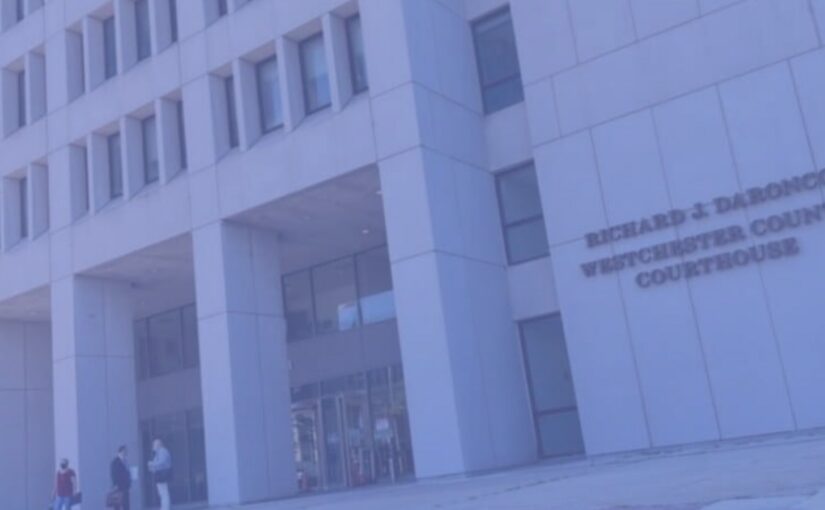
Westchester judge rules District cannot invoke attorney-client privilege for first time in court after failing to justify extensive redactions during FOIL process
WHITE PLAINS, N.Y. (Sept. 3, 2026) — A Westchester County judge ruled in favor of journalist Robert Cox Thursday in his Freedom of Information Law lawsuit against the City School District of New Rochelle, ordering the District to disclose previously redacted portions of its Shrub Oak International School legal bills and awarding Cox $350 in court costs.
Acting Supreme Court Justice Sheralyn Pulver ruled that Cox “substantially prevailed” in his Article 78 proceeding and ordered the District to produce its billing statements with the responsive portions unredacted.
The ruling brings Cox closer to answering the question that prompted the records fight: How much did New Rochelle taxpayers spend on legal services related to the District’s placement of students at Shrub Oak?
Cox has already obtained records documenting other costs associated with the placements, including tuition and transportation. The legal expenses are a remaining piece needed to calculate the total amount the District spent on Shrub Oak.
Judge Rejects District’s Privilege Argument
Pulver’s ruling dealt a significant blow to the District’s principal justification in court for the extensive redactions.
The District argued that portions of the invoices were protected by attorney-client privilege under CPLR § 4503 and therefore exempt from disclosure under FOIL.
Pulver ruled that the District could not rely on that argument because it had not invoked the exemption when responding to Cox’s records request.
The District’s original FOIL response stated that records were being withheld because they were “non-responsive,” according to the decision. It did not identify attorney-client privilege or another FOIL exemption as a basis for the redactions.
“Respondents may not now rely upon POL § 87(2)(a) and CPLR § 4503 to justify their redactions and avoid disclosure,” Pulver wrote.
Pulver cited appellate precedent holding that judicial review of an agency determination is limited to the grounds invoked by the agency when it made the determination and that an agency cannot introduce a new justification for withholding records during subsequent litigation.
Court Reviewed Records Privately
The decision followed an in camera review in which Pulver examined records submitted privately by the District.
The District had asked for permission to keep entries it considered entirely unrelated to Shrub Oak redacted even from the court’s review.
Pulver ultimately agreed that the District could determine in the first instance which entries were responsive to Cox’s request, ruling that the court’s role was not to make the initial responsiveness determination.
But that did not save the remaining redactions.
After reviewing the records, Pulver identified the portions the District itself had treated as responsive and concluded that the redactions within those portions “cannot stand.”
The judge ordered the District to provide Cox with billing statements in which the responsive portions are disclosed consistent with the records submitted to the court for review.
Cox Gets His Filing Fees Back
Pulver also awarded Cox $350 in costs, representing the filing fees he paid to bring the Article 78 proceeding.
Under FOIL, a court may award reasonable litigation costs when a requester has substantially prevailed. Pulver found that standard satisfied.
“Petitioner substantially prevailed in this action,” Pulver wrote.
The judge also noted that the District failed to issue a timely determination of Cox’s administrative appeal.
Pulver declined to award additional costs because Cox represented himself and had not incurred attorney’s fees, but ordered the District to reimburse his $350 in filing fees.
Cox filed the Article 78 proceeding without an attorney.
Nearly Two-Year Fight for Legal Bills
The ruling follows a records dispute that began with Cox’s October 2024 FOIL requests concerning Shrub Oak.
In an April 28 decision, Pulver dismissed portions of Cox’s proceeding involving other records but allowed his challenge concerning the legal invoices to continue. The court found that Cox had exhausted his administrative remedies on that request and that the District’s production had not rendered the dispute moot because questions remained about the breadth of its redactions and completeness.
The District subsequently submitted a verified answer defending its redactions, leading to Thursday’s final judgment on the surviving claim.
Pulver granted Cox’s petition to that extent, ordered disclosure of the billing statements, awarded him $350 and directed the Westchester County Clerk to enter judgment accordingly.
For Cox, the records themselves are the next step.
Once the District produces the newly unredacted billing information, the legal expenses can be calculated and combined with the tuition, transportation and other documented costs associated with Shrub Oak to determine the overall cost to New Rochelle taxpayers.
RELATED
This article was prepared with the assistance of AI tools under the direction and editing of Robert Cox.
Have information about this story? Email robertcox@talkofthesound (preferred) or contact via WhatsApp: +353 089 972 0669.