

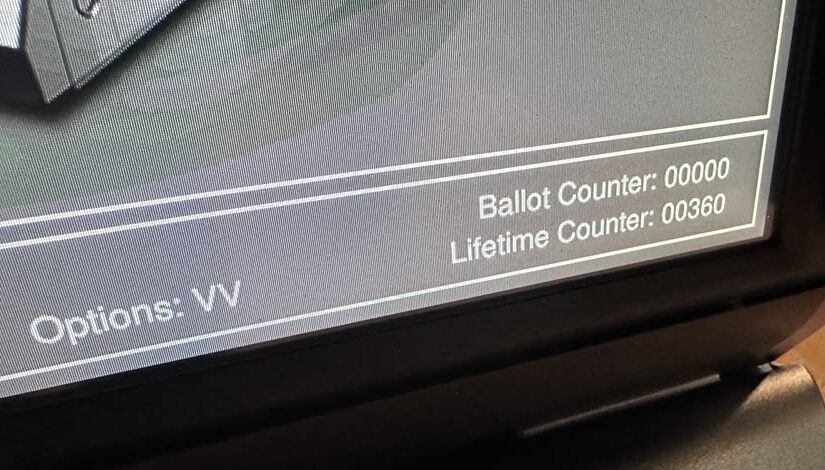
WHITE PLAINS, NY (Nov. 3, 2026) — The countywide rejection of paper ballots by voting machines Tuesday morning has raised an obvious question among Westchester voters: Why did the machines appear to work normally during nine days of early voting but suddenly refuse to accept ballots on Election Day?
One possible explanation involves a fundamental difference between how ballots are produced for early voting and how they are prepared for Election Day, according to New York state election laws, regulations and Westchester County election training materials. The documents establish that Westchester adopted ballot-on-demand printing for early voting in 2021, while its documented Election Day procedures rely on preprinted ballots distributed in numbered books.
The distinction does not establish what caused Tuesday’s problems. The Westchester County Board of Elections initially blamed the thickness of paper ballots but subsequently withdrew that explanation, leaving the cause unresolved. There is no confirmed evidence that the scanners themselves are defective, and the county has not established whether the problem involves the paper, printing specifications, ballot formatting or another issue.
Westchester County Executive Ken Jenkins has announced a news conference for 1 p.m. Tuesday, when officials are expected to address the disruption and provide additional information about efforts to resolve it.
Key Differences: Early Voting vs. Election Day
- Ballot production: Early voting uses ballot-on-demand (BOD) printers to produce ballots for individual voters. Westchester’s documented Election Day procedures use preprinted ballots supplied in numbered books.
- Polling locations: During early voting, Westchester voters can use any designated early voting center in the county. On Election Day, voters generally must report to their assigned polling places.
- Ballot selection: Early voting systems identify each voter’s election district and print the appropriate ballot. Election Day polling places receive preprinted ballots for their assigned election districts.
- Paper and printing: The two methods involve different production processes and potentially different paper supplies. Whether the paper stock or printing specifications actually differed in 2026 remains unconfirmed.
- What worked: No comparable countywide ballot-rejection problem was reported during early voting. On Election Day, voting machines began rejecting preprinted ballots across Westchester County.
Questions for the 1 p.m. Board of Elections News Conference
- What specifically caused voting machines to reject Election Day ballots, and has that cause been confirmed?
- Why did the Board of Elections initially blame ballot thickness and subsequently withdraw that explanation?
- Who printed Westchester’s 2026 Election Day ballots, and what paper stock and technical specifications were used?
- Were the preprinted Election Day ballots tested in the county’s voting machines before Tuesday? If so, when, where and with what results?
- What differences, if any, have officials identified between the ballots used during early voting and those distributed on Election Day?
- How many polling locations and ballots have been affected, and when will normal ballot scanning resume?
- How will emergency ballots be secured, transported, scanned or counted by hand, and when will those results be included in election totals?
The interruption has potentially significant consequences for the closely contested election in New York’s 17th Congressional District, where Republican Rep. Mike Lawler faces Democratic challenger Cait Conley. The district includes northern Westchester County and parts of neighboring counties, making the integrity and timely counting of Westchester ballots particularly important in a congressional election that could affect control of the U.S. House of Representatives.
Gov. Kathy Hochul, Attorney General Letitia James and both congressional candidates have urged voters to continue casting ballots despite the problems. The Board of Elections has assured residents that completed ballots will be secured in orange emergency ballot bags and subsequently counted under state election procedures.
The county’s documented procedures for printing, distributing and securing ballots provide important context for understanding Tuesday’s events, even as the immediate cause remains under investigation. The distinction between early voting and Election Day ballots was publicly documented more than five years ago.

On Oct. 21, 2021, New York State Senate Majority Leader Andrea Stewart-Cousins announced that Westchester County was introducing electronic poll books and ballot-on-demand printing systems for early voting.
The official announcement published on the New York State Senate website explained that registered Westchester voters could cast early ballots at any of the county’s 23 designated early voting locations that year.
“To help facilitate early voting this year, Westchester County’s Election Inspectors will now use electronic poll books and ballot-on-demand systems,” the announcement stated.
Stewart-Cousins described the new procedures as part of the state’s effort to expand access to voting.
“We passed early voting legislation in 2019 to help ensure that every registered voter’s voice is heard,” Stewart-Cousins said.
The system addresses a practical problem created by early voting. Unlike Election Day, when voters generally must report to their assigned polling places, early voting allows registered Westchester voters to cast ballots at any designated early voting center in the county. Because voters from different municipalities and election districts can use the same early voting location, they cannot all receive identical ballots. A New Rochelle voter, for example, may face different candidates and local contests than a voter from Yonkers or White Plains.
Ballot-on-demand systems allow election inspectors to identify a voter’s election district and produce the appropriate ballot at the polling location. Rather than maintain inventories of every possible ballot configuration, election workers can print the correct ballot when the voter checks in.
The statewide rules governing the process appear in 9 NYCRR § 6210.7(i), titled “Ballots Printed on Demand.” The regulation requires ballot-on-demand printers and supplies to be secured according to State Board of Elections procedures. It also directs inspectors to record how many ballots of each ballot style are printed. Under the regulation, ballots printed on demand are considered delivered to election inspectors at the time they are produced. Inspectors must account for their distribution, and electronic logs maintained by the printing application may be used to satisfy that requirement. These provisions establish ballot-on-demand printing as a recognized and regulated method of producing ballots in New York.
The 2021 Senate announcement confirms that Westchester adopted the technology for early voting, although the precise printer models, paper supplies and procedures used during the October 2026 early voting period have not yet been independently verified.
Election Day ballots are governed by a different set of production and distribution procedures.
New York Election Law § 7-106 establishes the requirements for ballots used with optical scanners, including their physical characteristics, identifying information and ballot stubs.
Section 7-106(4) requires Election Day ballots to be printed with a stub separated from the ballot by a perforated line. The statute further specifies that the stubs be consecutively numbered, beginning with No. 1. An exception appears in Election Law § 7-105, which permits election boards to dispense with numbered stubs if they implement a state-prescribed alternative ballot-accountability system. Such a system must account for the ballots received by election inspectors, track those distributed and spoiled during voting, and reconcile the total with unused ballots when polls close.
The state’s regulations provide detailed instructions for producing, packaging and distributing preprinted ballots.
Under 9 NYCRR § 6210.7(e), ballots generally must be bound in packages of 100 unless a county board adopts another quantity through written procedures. Where numbered stubs are used, the packages must be stapled together to maintain ballot accountability. The ballot-package cover must identify the election date, political subdivision, number of ballots and applicable range of numbered stubs. The packages must be delivered to election inspectors in secure, sealed and labeled containers. The regulations also restrict how inspectors handle the ballots during voting. Only one ballot package at a time should be kept on the inspectors’ table, with the remaining packages secured until needed. When a package is exhausted, inspectors retain the cover and numbered stubs before opening the next package. At the end of voting, they must account for packages that were completely used, partially used or left unused. These requirements make it possible to reconcile the number of ballots supplied to a polling location with those issued to voters, spoiled or remaining unused.
Westchester County’s own Poll Worker Instruction Manual provides additional evidence of how Election Day ballots have traditionally been distributed and accounted for. The county manual, dated Jan. 22, 2018, instructs election inspectors to arrange ballot books, poll roster books, sign-in sheets and sample ballots at their assigned election district tables. Additional ballot books must be kept in a secure location accessible only to election inspectors. The manual requires inspectors to use ballot books in sequential order, beginning with Book No. 1. It also instructs workers to keep only one English-language ballot book and one Spanish-language ballot book on the table at a time during a general election. Separate sections of the manual address ballot book counts and ballot transmittal forms, documenting how election inspectors must account for the ballots supplied to their election districts.
The manual also specifies that four election inspectors are assigned to each election district, with two representing each of the two major political parties. Their responsibilities include verifying voter eligibility, distributing ballots, maintaining election records and securing voting materials. The county’s 2018 manual predates the introduction of ballot-on-demand printing for early voting in 2021. Its instructions therefore provide historical evidence of Westchester’s Election Day procedures but do not independently establish every detail of the system being used Tuesday.
The Westchester County Poll Worker Instruction Manual is no longer accessible online, although portions of the document remain indexed by search engines.
Perhaps the most significant provision for understanding Tuesday’s ballot problems is 9 NYCRR § 6210.7(b), which establishes detailed requirements for ballot production.
The regulation requires voting-system vendors to provide county election boards with specifications for the ballots their equipment is designed to process. Those specifications must address numerous physical and printing characteristics, including paper weight, grain, color, dimensions, perforations, ballot positions, printing tolerances, ink and packaging. The regulation requires county election boards to transmit those specifications to the printers selected to produce their ballots. The requirement is particularly relevant because the Westchester County Board of Elections initially identified paper thickness as the cause of Tuesday’s ballot rejections before removing that explanation from its public statement.
Under Election Law § 7-106(2), paper ballots intended for optical scanners must also conform to the voting system’s technical requirements for paper quality, size, color and weight. These provisions demonstrate that the physical characteristics of ballot paper are not incidental details. They are specified technical requirements intended to ensure that printed ballots can be processed by the voting equipment.
The regulations also require ballot printers to certify the number of ballots produced and delivered, as well as the destruction of any additional ballots printed.
The existence of those standards does not establish that a paper defect caused Tuesday’s problem. Election officials would need to determine whether the ballots involved met the applicable specifications and whether differences in paper, printing, ballot formatting or machine settings contributed to their rejection.
The available records do not establish who printed Westchester’s 2026 Election Day ballots, what paper stock was used, whether the completed ballots were tested against the scanners before Election Day or how that stock compared with the paper used during early voting.
New York law also anticipates situations in which voting machines cannot accept completed ballots and establishes procedures for securing and counting them.
Election Law § 9-110 addresses Election Day paper ballots that have not been scanned because a scanner was unavailable or a voter abandoned a ballot at the machine. The statute directs a bipartisan team of election inspectors to scan previously unscanned ballots at the close of polls if a scanner is available. Ballots that cannot be scanned must be counted by hand under the procedures established by law.
For hand counting, inspectors must examine each ballot, announce the votes and record the results on tally sheets or the return of canvass. The statute distinguishes ordinary Election Day ballots from absentee and affidavit ballots, which are processed under separate procedures.
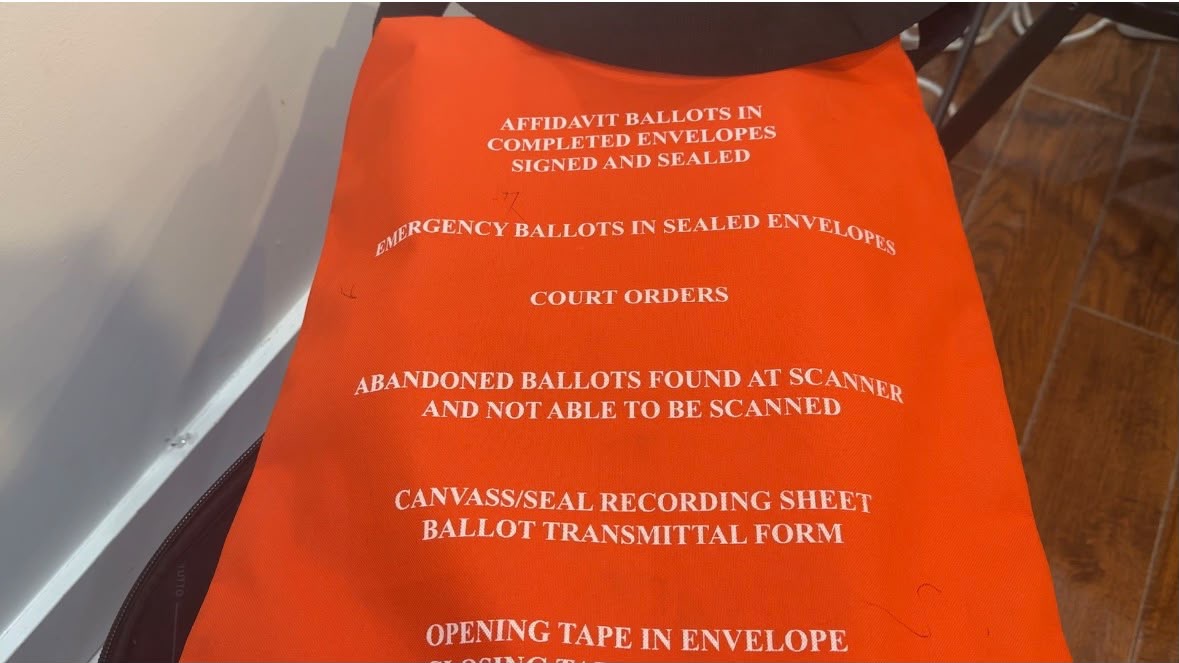
Westchester County’s use of orange emergency security bags is consistent with its established ballot-security system. The county’s 2018 Poll Worker Instruction Manual describes an orange security pouch designated for completed affidavit ballots, emergency ballots that cannot be scanned into the backup machine, court orders, certain abandoned ballots, election reports and other documents.
The training materials also describe a system of numbered security seals that election inspectors must inspect and document. The county’s Return of Canvass Report contains entries for the orange bag’s top ballot slot and bottom zippered compartment, allowing inspectors to record seal numbers and whether the seals remain secure. The instructions distinguish between seals that election inspectors may break and replace during authorized procedures and seals that must remain intact. They also direct workers to contact the Board of Elections if required seals are not secure.
Westchester’s ImageCast scanner instruction materials provide additional documentation of the county’s voting equipment and ballot-security procedures.
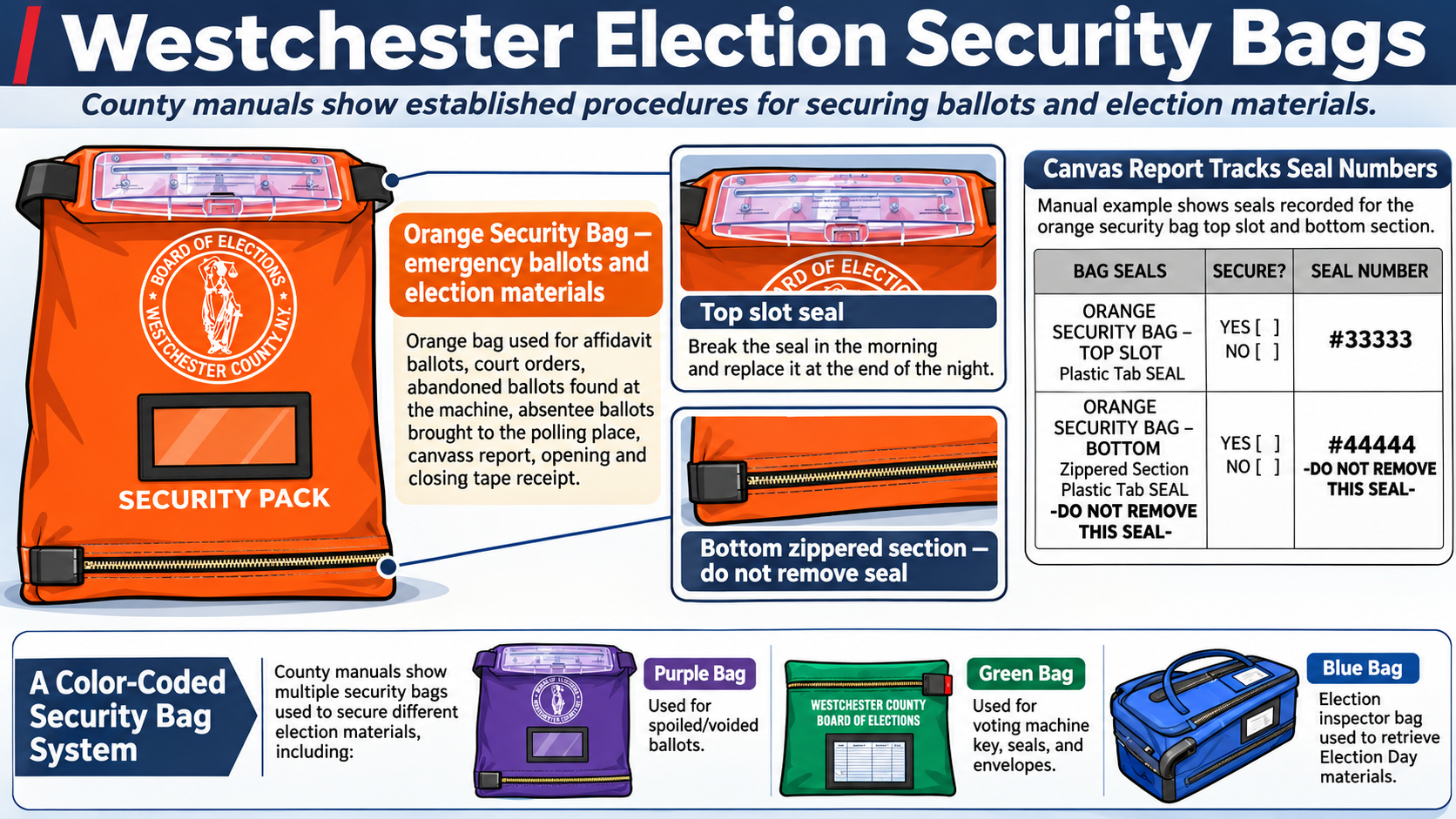
The orange bags are part of a broader color-coded system of security pouches used to hold different election materials. County instructions also identify green pouches for voting machine keys and seals, purple pouches for spoiled or voided ballots, and silver pouches for voting machine memory cards.
The existence of these procedures demonstrates that Westchester had established methods for securing ballots when machines could not accept them long before Tuesday’s disruption.
In its Election Day statement, the Board of Elections instructed voters to continue completing paper ballots and said they would be placed in designated orange emergency bags that would remain secured and monitored until they could be counted.
“Let us be absolutely clear: Every eligible vote will be counted,” the board said.
The Election Protection hotline, 866-OUR-VOTE, reported receiving dozens of calls Tuesday morning from Westchester voters concerned about machines refusing to accept ballots.
The organization confirmed that poll workers were correctly allowing voters to complete emergency paper ballots and secure them in designated containers. It also advised voters that attorneys were available to answer questions and provide assistance in multiple languages.
Responsibility for administering the election rests with the Westchester County Board of Elections, an independent bipartisan election agency established under New York state law.
Despite its name, the Board of Elections does not operate under the direction of Westchester County Executive Ken Jenkins. It is not simply a division of the New York State Board of Elections. Under Election Law § 3-204, county election commissioners are appointed by the county legislative body following recommendations from the major political parties. In Westchester, that appointing authority is the County Board of Legislators.
The county board administers elections locally under New York state election law and the supervisory and regulatory authority of the State Board of Elections. Although county government provides funding for election operations, the county executive does not direct the commissioners’ election administration.
Westchester’s election commissioners are Democrat Tajian M. Nelson and Republican Douglas A. Colety, who outlined election procedures during a September 2026 information session conducted by the County Board of Legislators.
The distinction between county government and the Board of Elections is important in determining responsibility for Tuesday’s disruption, including the production and distribution of ballots and the administration of election equipment.
The documentary record establishes that Westchester adopted ballot-on-demand systems for early voting in 2021 and that New York law separately regulates the production, packaging and distribution of preprinted Election Day ballots. It also establishes that the state requires detailed specifications for ballot paper and printing, as well as procedures for securing and counting ballots that cannot be scanned.
What remains unknown is precisely what happened Tuesday and whether the difference between early-voting and Election Day ballot production contributed to the countywide rejection of ballots.
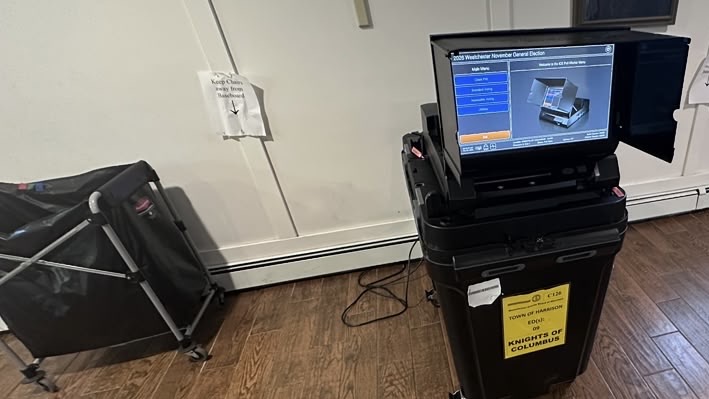
The Board of Elections has not identified a confirmed cause in its corrected statement. It has not established whether the problem involved paper thickness, another physical characteristic of the ballots, printing alignment, scanner settings or some other issue.
There is no publicly established evidence that the ballot rejections were caused by intentional interference. The existence of a countywide technical problem, even one affecting a contested congressional election, does not by itself establish wrongdoing.
The most immediate questions concern the county’s 2026 ballot supply, the technical specifications used to produce it, the testing performed before Election Day and the differences between the ballots successfully processed during early voting and those rejected Tuesday.
The Board of Elections’ scheduled 1 p.m. news conference may clarify whether the documented differences in ballot production help explain what happened or whether another cause has been identified. Until then, the available evidence establishes how the two ballot-production systems are supposed to operate, but not why voting machines began rejecting completed ballots Tuesday morning. State law provides established procedures for preserving and counting those ballots regardless of the cause of the problem.
This article was prepared with the assistance of AI tools under the direction and editing of Robert Cox.
Have information about this story? Email robertcox@talkofthesound (preferred) or contact via WhatsApp: +353 089 972 0669.
Discover more from Talk of the Sound
Subscribe to get the latest posts sent to your email.